A new batch of speed camera fine updates has left motorists facing the deeply British problem of having to look miserable while travelling at a perfectly legal 29mph.
By Our Security Correspondent: Ben Twarters
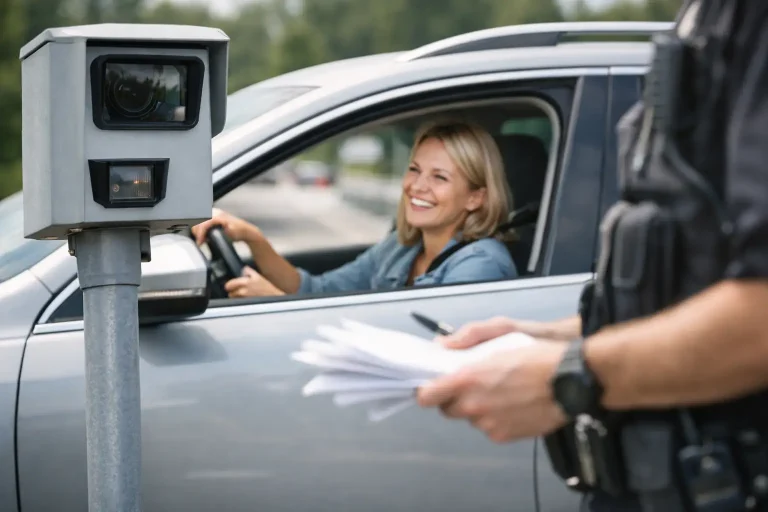
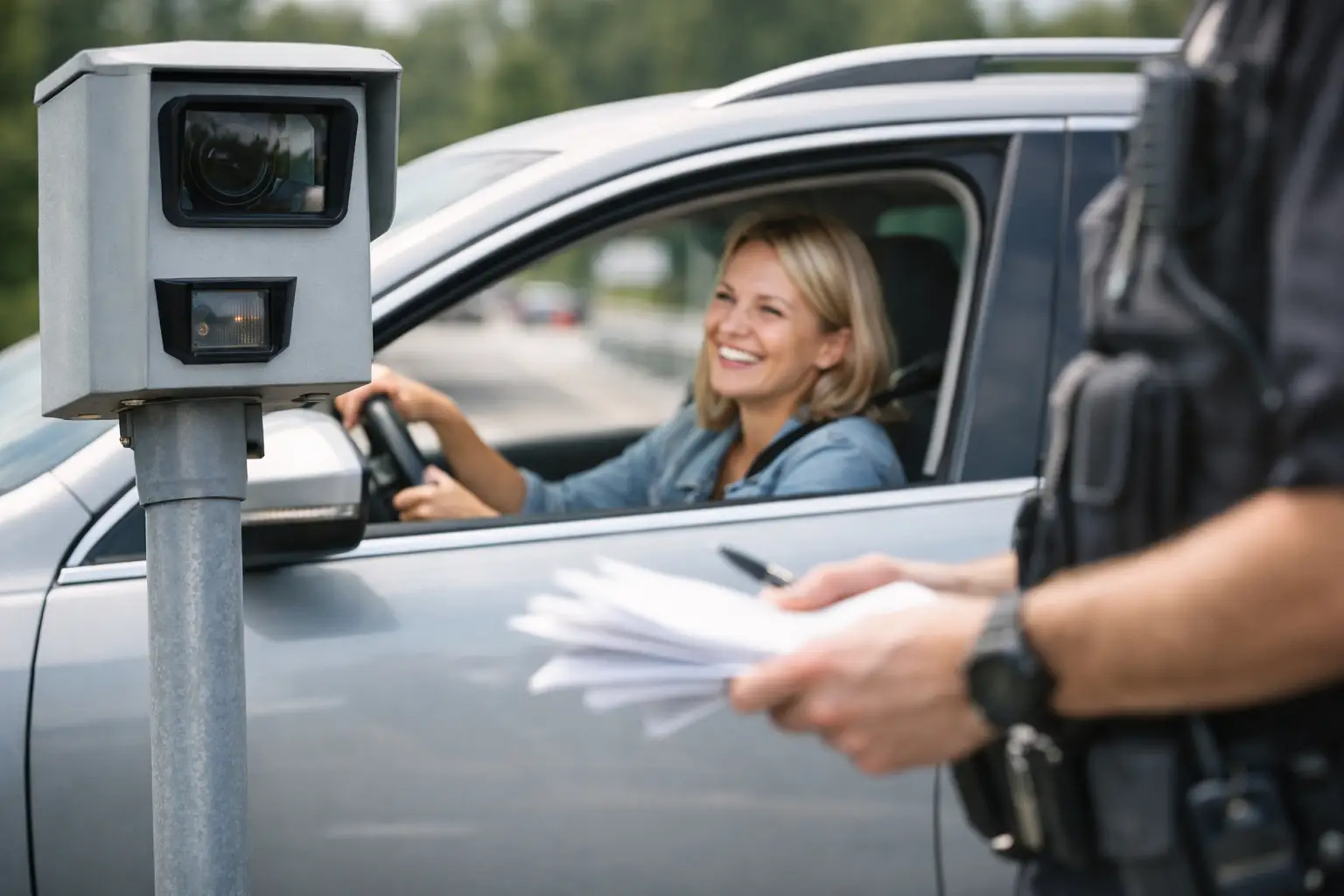
The controversial scheme, understood to be entirely fictional but nevertheless already upsetting several men on Facebook, uses advanced facial-recognition technology to identify drivers displaying what officials describe as “an inappropriate level of personal satisfaction”. Those caught smiling at the wheel can expect a fixed penalty notice, three points on their licence and a leaflet explaining that happiness should be kept indoors, preferably behind drawn curtains.
One Bury St Edmunds motorist, who asked not to be named because he was still trying to look suitably crestfallen, said he had been flashed outside a retail park after hearing his favourite song on the radio.
“I wasn’t speeding,” he insisted. “I was just enjoying a sausage roll and a bit of 80s pop. Next thing I know, a camera’s gone off and I’ve received a letter accusing me of ‘reckless buoyancy’.”
Speed camera fine updates put smiles in the frame
The new cameras have reportedly been trialled on roads across Ipswich, Lowestoft and the bit of the A14 where everyone briefly assumes the roadworks might finally be finished. Unlike conventional speed cameras, which measure velocity, the devices assess a driver’s emotional state through a combination of facial movement, eyebrow positioning and whether they appear to be singing without shame.
A spokesperson for the invented Suffolk Road Mood Enforcement Partnership said the technology was introduced after a rise in “carefree motoring”.
“Road safety is about more than speed,” said Nigel Plumb, Director of Responsible Facial Expressions. “It is about creating the correct atmosphere. A motorist who is laughing, grinning or visibly pleased with their meal deal may be insufficiently alert to the crushing administrative disappointment of modern road use.”
Mr Plumb said drivers were permitted a “neutral expression of mild resignation”, as well as the traditional British motorway face, in which a person stares ahead while quietly wondering whether they left the immersion heater on in 2007.
Anything beyond that could trigger a review.
The offences drivers did not know they were committing
According to guidance allegedly sent to selected households in a brown envelope marked IMPORTANT, the following behaviour may be interpreted as evidence of excessive cheerfulness: whistling at traffic lights, laughing at a child in the back seat, nodding along to a podcast, or receiving a text from a family member saying the boiler has inexplicably started working again.
Drivers who make eye contact with a passenger and smile could face an additional £60 charge. Couples laughing together in a car park have been warned that they may be treated as a “coordinated positivity event”.
The most serious category, known as aggravated contentment, applies to anybody spotted driving with the roof down between April and September while wearing sunglasses purchased specifically for the occasion.
“Some people will say this is petty,” said Mr Plumb. “But these are usually the same people who think a roundabout is a place for improvisation.”
There are exemptions. Funeral processions, trips to the dentist and anyone travelling towards the centre of Norwich on a Saturday are presumed unhappy until proven otherwise. Farmers driving a muddy lorry after 14 hours in a field may also qualify for automatic dispensation, though the system can still issue penalties if it detects a smile caused by an unexpectedly cooperative combine harvester.
Suffolk motorists practise their best disappointed faces
The announcement has created a booming trade in dashboard-mounted expression aids. One entrepreneur in Needham Market is selling a clip-on lower-lip weight designed to give drivers the look of a man who has just discovered his council tax has gone up by £11.42.
Meanwhile, a driving instructor in Felixstowe has begun teaching pupils how to maintain a safe, regulation-approved frown while performing a three-point turn.
“The younger ones find it difficult,” she said. “They’ve grown up taking photos of themselves all the time, so their faces naturally do things. We have to work on it. I tell them to imagine they’ve arrived at the pub and been told the kitchen closed two minutes ago. That usually gets the desired result.”
Her pupils are now taught the four key expressions required for life on Suffolk’s roads: restrained annoyance, administrative fatigue, supermarket car park suspicion and the hollow stare of someone who has just realised they are in the wrong lane for the Orwell Bridge.
The AA, RAC and a man called Brian who owns a white van have all called for clarity. Their central concern is whether motorists can appeal if the camera mistakes a grimace for a smile, particularly when navigating potholes large enough to be classified as seasonal lakes.
Officials insist there will be a fair process. Drivers may challenge a fine by submitting a signed statement from a neighbour confirming that they are, in everyday life, no fun whatsoever.
Cameras will also monitor dangerous optimism
The scheme is expected to expand next year, with cameras able to detect other hazardous states of mind. Early proposals include fines for drivers who believe they will find parking near the station, motorists who set off for a bank holiday trip without checking the traffic first, and anyone who says “it’ll probably be quiet” before visiting a garden centre.
There are also rumours of a special levy for drivers seen giving a thumbs-up after successfully merging. The Department for Transport has not denied the reports, mainly because it has not been asked in this entirely made-up story.
A pilot system outside Stowmarket is said to be testing whether it can identify smugness. This would be particularly useful for penalising motorists who mention that they bought an electric car before anyone else has had a chance to discuss electricity tariffs.
Critics have pointed out that the technology may be unreliable. One resident claimed he received a warning letter after driving past a camera while chewing a mint. Another said the system confused his natural face with “sustained contempt for the state”.
“That’s just how I look,” he explained. “I was on my way to pick up a prescription.”
How to avoid a fine for looking too pleased
For now, motorists are advised to keep their joy below the legal limit. Avoid playing songs that remind you of a particularly good summer. If a friend tells a funny story, think immediately about train fares. Should you spot a pleasing view across the Suffolk countryside, remember that someone somewhere is trying to reverse a caravan.
The safest approach, experts suggest, is to adopt a look of low-level concern at all times. Not panic. Nothing so dramatic. Just the familiar expression of a person who has opened an email beginning, “Further to our previous correspondence”.
And if a speed camera flashes while you are enjoying yourself, do not worry. It may simply be recording evidence for the authorities, your insurer, your local parish council and, quite possibly, your mother.
After all, you couldn’t make it up. But until the appeal form arrives, best save the grin for when you get home.