Home Blog Page 287

Can Ipswich Town make it back to the Championship?

0
ITFC ground

It’s been a rocky few years for Ipswich Town. Back in 2018, a string of defeats led to manager Paul Hurst being sacked after less than five months in the job, and new boss Paul Lambert failed to steer the Tractor Boys away from the impending cliff-edge of relegation.

The 2019/20 season sees Ipswich playing in the third tier of English football for the first time since 1957 – a turn of events which Paul Lambert described as “gut-wrenching for everybody” (well, everybody except Norwich City fans).

But how have they been doing since dropping down to League One? And what are the chances of clawing their way back up to the Championship? Let’s review the season so far.

A barnstorming start

If anyone thought the Tractor Boys would come out at the start of the season looking dejected and unmotivated after being relegated, well… the players were quick to prove they were ready to get on with the task at hand. Their first third-tier match in over six decades resulted in solid a 0-1 victory over Burton Albion.

This was a bit of a boost for Blues fans still stinging over what happened last season, and while they drew the next two games against Sunderland and Peterborough, those stalemates were followed by a triple-whammy of victories – including a 0-5 demolition of Bolton Wanderers.

True, the Trotters weren’t exactly in the best of places at the time, being embroiled in a messy takeover and lacking a full-time manager at the time. But this was still a reassuring reminder for Ipswich fans that their team may have been down, but they certainly weren’t out, straddling the top spot in League One.

The hot streak was to continue. Soon after putting Bolton in their place, the Tractor Boys won 3-0 against Shrewsbury Town and followed up a draw against Doncaster Rovers with another clutch of victories – including a 4-1 seeing-off of Tranmere Rovers.

All good things…

Must come to an end. And, after going 11 games unbeaten since entering League One, Ipswich Town suffered their first loss against Accrington Stanley in October. Being beaten 2-0 was a huge blow for the side and their fans, who must have had flashbacks to the bad old days prior to relegation.

To make matters worse, this wasn’t a one-off glitch. It was the first in a one-two punch, with Ipswich losing 0-2 against Rotherham just days later, and being knocked off the top of League One in the process.

Suffering the same losing scoreline twice in a row upset the powerful momentum that had built up since the start of the season, but the Blues were back on form in the following two games, delivering reassuring wins against Southend and Rochdale. Then the nerves seemed to kick in again, with the next eight games run of draws and defeats, including an edge-of-the-seat, eight-goal thriller against Lincoln City on 29 December.

Exciting it may have been, but losing 5-3 was a sorry end to 2019 for Ipswich, particularly as they’d seemingly overcome their post-relegation woes and hit the ground running when the season began.

New year, new start?

After the stuttering end to the previous year, 2020 got off to a slightly more optimistic start for the Blues. Yes, there was a paltry draw against Wycombe Wanderers on New Year’s Day, but their next match saw them thump to victory in a 4-1 thrashing of Accrington Stanley. Kayden Jackson, James Norwood, Alan Judge and Will Keane all deserved to take bows for settling fans’ nerves by delivering the first win for Ipswich since November.

A few more wins were to come, including a satisfying slice of vengeance served up to Lincoln City towards the end of January. Having been beaten by the Imps in that December thriller, the Tractor Boys came out on top on 25 January, with a 1-0 win that put Ipswich back at the top of League One.

But they weren’t destined to be there for long, and it’s been far from plain sailing for Ipswich Town as they’ve slipped down the standings in recent weeks. That win over Lincoln City was followed by three defeats, including a 1-4 bruising from Peterborough. Since that home drubbing there has only been one win out of seven, including four successive loses, which have piled the pressure on the boss. This has been the final straw for some fans, who were chanting “Lambert, sort it out” from the stands in recent games.

The frustration is understandable. Ipswich Town were expected to do well when they arrived from the Championship, but haven’t managed to make good on the promise of their successful early run in League One. The question is, do they have what it takes to turn things around get back in the crucial top six to stand a chance of promotion back to the Championship?

Well, not according to some comprehensive number-crunching by the website Sports Club Stats, which uses a clever bit of software to simulate millions of possible results for the remaining League One games, in order to work out odds of different outcomes.

According to this system, which is obviously far from ironclad but still not exactly music to the ears of Blues fans, they only have an 8% chance of promotion, and most likely won’t even have a chance of a play-off finish. Of course, anything is possible in football, and if you do fancy a punt backing Ipswich to make the play-offs or bag promotion, you’ll find some great odds at the bookies available at TopRatedBetting.com.

What can the Tractor Boys do? Ipswich journalist Andy Warren reckons some more ruthlessness is in order, saying: “It’s a story we’ve seen, read about, talked about heard about so many times before about playing good football and dominating – probably not taking chances, conceding a goal and then running out of steam.”

“It’s a familiar tale and it’s one that if things don’t turn around this season, that’s what we’ll look back on again. It’s probably like last season, actually, very similar”, he added.

At the time of writing, Ipswich Town are stuck at 10th, which highlights what an uphill battle they face to keep those promotion hopes alive. After so long in the Championship, fans will be forgiven for thinking that it should only be a matter of time before they re-take their rightful place up there. The pressure is on Paul Lambert to live up to their fevered expectations, and there’s all to play for. The coming weeks and months are going to every bit as nailbiting as the culmination of last season – but the Blues will be praying to the football gods for a better outcome.

Coronavirus panic buying sees artichoke hearts cleared from Waitrose shelves

3

Artichoke hearts, cappuccino mousse and curd cheese have sold out across Waitrose stores as well-heeled shoppers panic over coronavirus fears.

Shelves were cleared of posh grub as customers attempted to stock up for grim weeks of self-isolation.

It is feared lobster, avocado, houmous and quark will also be sold out in Waitrose within hours.

Frustrated shopper Lorraine Fisher, 34, said: “I woke up in a panic yesterday when I realised I only had two cans of artichoke hearts left in the larder.

“I went to my local Waitrose and they had sold out. People were wandering around in tears. How are we supposed to cope now?

“Someone said Lidl had artichoke hearts but I won’t be seen dead in there, and I doubt they sell curd cheese.”

It is not known when Waitrose bosses will get more of the tasty, spiny vegetables in stock.

Meanwhile, sales of the Daily Mail continue to soar because everyone has run out of toilet roll.

Daily Mail sales soar as coronavirus panic buying wipes out toilet roll stock

0
Daily Mail toilet roll
Daily Mail substituting for toilet roll

Sales of the Daily Mail are soaring – but not because of any new-found fondness for its journalism.

Instead, British shoppers are snapping up the rag because toilet roll is running out in the shops.

Panic buying over the coronavirus is leading to bog roll shortages – but enterprising Brits know the Daily Mail is the ideal replacement.

Shopper Lorraine Fisher, 34, said: “My usual brand of soft, strong and very long lavatory paper has been cleared off the shelves by overly-worried shoppers.

“But like many others, I instead purchased a copy of the Daily Mail, which is good for nothing except wiping your arse.”

Daily Mail executives were delighted with the unexpected sales rise after suffering for years with their circulation going down the toilet.

Circulation boss Alex Howard said: “The coronavirus has been great for business.

“We’ll wipe the floor at the British Newspaper Sales Awards now.”

Norwich City dusting down trophy cabinet after reaching cup quarter-final

1
Norwich FC trophy cabinet

Excited staff at Norwich City Football Club have begun dusting down their empty trophy cabinet after the magnificent achievement of reaching the FA Cup quarter-finals for the first time in 28 years.

Even though the Norfolk club must win another three games before lifting their first-ever proper trophy, preparations in the board room are underway.

Norwich spokesperson Lorraine Fisher, 34, said: “Our trophy cabinet has remained empty since the club was formed on a carrot field in 1951.

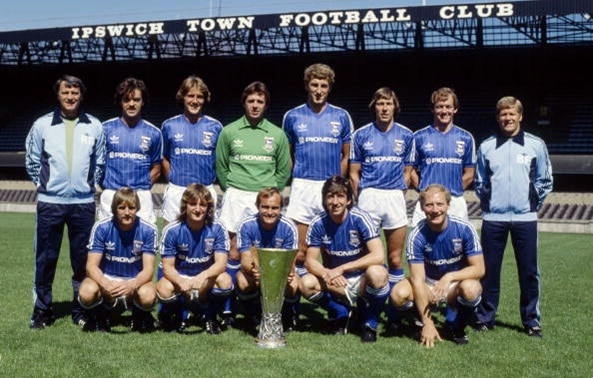
“It’s always been upsetting to see our bigger local rivals, Ipswich Town, enjoying a packed trophy cabinet including gleaming European and domestic trophies.

They have won the UEFA Cup, FA Cup and the top-flight league championship.

“We participated in the UEFA Cup once.

“But now we are odds-on to win the FA Cup. We’re in the quarter-finals; what could possibly go wrong?”

Norwich scraped through the fifth round on penalties last night.

Club owner Delia Smith is desperate to fill the empty trophy cabinet with something.

A pal said: “She wakes up in the night screaming at trophies, ‘Where are you? Let’s be having you’, but it never works.”

Five jockeys that have won multiple Gold Cups at Cheltenham

0

There are certain horse races that all jockeys dream of winning, and the Gold Cup at the Cheltenham Festival is undoubtedly one of them. Run over a distance of three miles, two furlongs and 70 yards, the Gold Cup is a major test of the credentials of both horse and jockey.

For most riders, winning the Gold Cup just once represents something of a dream, but there is an elite group of jockeys who have won the famous race on more than one occasion. With the 2020 race fast approaching, and as those who place a Gold Cup bet on Cheltenham Festival try and determine who might win, we look at five jockeys who have enjoyed multiple victories in the famous Cheltenham showpiece.

Tommy Carberry

You have to go all the way back to the 1970s for Tommy Carberry’s Gold Cup triumphs. Riding the famous L’Escargot, Carberry won the race two years running in 1970 and 1971. The horse, trained by Richard R. Guest, was a 33/1 outsider going into the 1970 edition, but Carberry produced a fine performance to get the win.

Not content with just two Gold Cup triumphs, the Irish jockey would go on to win it once again in 1975, this time on Ten Up, completing a hat-trick of victories in the famous race.

Tony McCoy

One of the most recognisable names in horse racing, Anthony Peter ‘Tony’ McCoy is another who has enjoyed Gold Cup glory more than once. His first success came in 1997, riding the 20/1 shot Mr Mulligan to victory, but he would have to wait 15 years to double his Gold Cup titles. In 2012, he guided Synchronised to a first-place finish, to the delight of racing fans across Britain and Ireland.

McCoy is a much-loved figure in the sport, and won the BBC Sports Personality of the Year award in 2010, becoming the first jockey to get their hands on the famous sporting prize – after winning the Grand National on Don’t Push It..

Richard Johnson

Richard Johnson is widely regarded as the finest jockey in jump racing at the moment and has won the Champion Jockey title four years running. His first taste of glory in the Gold Cup came in 2000 on Looks Like Trouble, but like McCoy, Johnson would have to wait a long time for his second triumph. It came 18 years after he won the race for the first time, as he guided the Colin Tizzard-trained Native River to victory in 2018.

Sadly, Native River has been ruled out of the 2020 race, and so won’t have the chance to emulate the great Kauto Star by reclaiming the Gold Cup.

Jim Culloty

Jim Culloty is one of only three jockeys to have won the Gold Cup on three successive occasions, as he steered Best Mate to victory in 2002, 2003 and 2004. The Henriette Knight-trained horse was 7/1 to win the race in 2002, and was the odds-on favourite by the time the 2004 race came around – proof of the dominance Best Mate and Culloty showed in those years.

Culloty achieved the rare feat of winning both the Gold Cup and the Grand National in the same year in 2002, before retiring in 2005 as one of the Gold Cup’s most successful riders.

Ruby Walsh

Another famous name in horse racing, Ruby Walsh won the Gold Cup in 2007 and 2009, riding the much loved Kauto Star. Clive D. Smith’s horse was the favourite ahead of both races, proof of Walsh’s reputation and expert performances in the saddle on both occasions.

Kauto Star is the only horse to have regained the Gold Cup. Having lost the title to stablemate Denman in 2008, Walsh and Kauto Star came back stronger to win it back a year later, etching their names in Gold Cup folklore.

Geoffrey Chaucer came from Kesgrave

4

By Janice Page-Turner, Literary Editor

Academics have made an extraordinary discovery proving that Geoffrey Chaucer, widely accepted as the father of English literature, was born and raised in Suffolk.

Long-forgotten papers uncovered at the Suffolk Records Office show that the celebrated poet, who hit number one in the book-selling charts with The Canterbury Tales, was born in 1343 in Gressgrava, the small hamlet now known as Kesgrave, near Ipswich.

Dr Lorraine Fisher, 34, a lecturer at University Campus Suffolk, was sifting through ancient manuscripts when she made the discovery in a diary that will change educational thinking about the brilliant Suffolk copywriter.

“It was an incredible surprise,” she said. “We already knew Chaucer’s grandfather was a rich wine merchant who lived in Ipswich, but to get concrete evidence in a diary entry linking Chaucer’s birthplace to Kesgrave was still unexpected.”

At the time, Gressgrava was a small agricultural settlement with just a few farms, a church and a coaching inn called The Farmhouse. The pub is still there, but the nearby building where it is believed Chaucer was born has now been swallowed up by the Grange Farm development.

“We can’t pin him exactly to the pub, but it is thought it was Chaucer’s favourite watering hole – and our research makes it likely that his grandfather might have owned it,” Dr Fisher explained.

Chaucer’s most famous work was the Canterbury Tales, which told the stories of fictional pilgrims on the road from London to Canterbury Cathedral.

And some Suffolk historians now believe the tales could have been inspired by a journey now serviced by a well-known local bus route.

route-66

All aboard: bus route may have inspired a young Geoffrey Chaucer. (Photo by Peter Eastern)
“Chaucer would almost certainly have walked along the track now covered by the Route 66 bus service,” said Dr Fisher. “The pilgrims he met on Route 66, particularly between Grange Farm and Martlesham, could well have sparked the initial sketches in his head for the characters in the Canterbury Tales.”

Dr Fisher added that Chaucer would have been taken to live in London at a fairly early age so it would always remain a mystery as to how much he remembered about his formative years in the Suffolk countryside, particularly as he spent a lot of time in the pub.

geoffrey-chaucer

Paperback writer: Geoffrey Chaucer
She believes the turbulent history of Chaucer’s family offers clues to why he ended up in Kesgrave.

“It is well documented that his father was kidnapped by an aunt at a young age in the hope of marrying him off to her daughter in order to keep a property in Ipswich.

“The parents of Geoffrey Chaucer understandably wanted to protect their son from a similar fate so in order to safeguard his inherited wealth from jealous members of the family, he was hidden in Kesgrave, a place that even to this day people never seem to leave.”

Dr Fisher will be sharing her findings as guest speaker of the Chaucer Society later in the month.

Elderly man beating older man to take on pensioner for White House job

1
Three old men

Three very old men are locked in a battle to take on perhaps the most stressful job in the world, it has emerged.

Democrat Joe Biden, 77, seems likely to beat Bernie Sanders, 78, for the right to fight Donald Trump, 73, for the White House.

It is now law in the US for Presidential hopefuls to be male, very old and implausibly out of touch with normal people.

US political commentator Lorraine Fisher, 34, said: “Even though I am female and young – I am 34 – I am qualified to comment on this.

“The US political system is bizarre. We have a 78-year-old heart attack victim who would be 79 by the time he took office, and 87 if he won two terms.

“I’ve seen people in their late eighties, and they should be putting their feet up with a cup of tea, not trying to run the world.”

Biden seems likely to win the Democratic race to run for President next November after a successful Super Tuesday.

Why sports are important in the UK economy

0

It’s not just nurses and teachers that are underpaid in the UK. Anyone working in the UK’s sporting industries may also want more money when they hear how valuable that sport is to the economy and how much money is floating around the sporting world.

There are some great jobs on Jobrapido, but before you start scrolling through them, let’s take a look at the UK’s sports industry, why the best sports jobs are in Suffolk – and how it all helps the local economy. 

Where the big money is

Sport in the UK is overseen by a governing body known as UK Sport. This organisation is responsible for distributing government sports funding to other entities, NGAs, clubs and initiatives. The funding is reserved for elite-level sport. The amount of money being used to help athletes is staggering. For example, the Olympic rowing team for Tokyo 2020 has received over £30 million.

This is a drop in the ocean compared to other elite sports such as the Premier League, which is a colossal contributor to the economy. The Times has even reported that in 2017, the league brought around £7.6 billion to the economy, enough for many hospitals – or approximately five months of our weekly £350 million membership with the EU (sarcasm intended!).

The Lottery and grassroots sport

The National Lottery money raised goes towards worthwhile causes, and one of those causes is sport in the UK. It pays for sporting facilities, children’s clubs and many more community-based sports projects. These help to develop young people and keep them fit and healthy.

The result of these initiatives is helping to develop children as social team players and their confidence. Still, it also has long-term effects at reducing the toll on the NHS and even improving mental health.

What about Suffolk?

If you hadn’t already heard, Ipswich is burning the torch for the UK tourism industry as the city was named in the top 25 destinations in the world on TripAdvisor. Yet, it is not just mistakes on well-known sites that put Suffolk on the map. The sporting activities here are also significant contributors to the local economy with research putting the figure close to a whopping £300 million.

Economic specialist Hatch Regenris carried out research evaluating sports contribution to the local region and found that:

  • Sport contributes £270 million each year to Suffolk
  • 10,000 jobs are made here through sport
  • That equates to 3% -double national levels
  • Sport employment is up 60%, the fastest growing sector around.

There is a lot to shout about regarding the sporting industry in Suffolk and the connected employment market. Anybody seeking a sports job may want to consider the region as one of the best places to work within the industry – if they are not already rowing in Tokyo or working for Premier League clubs.