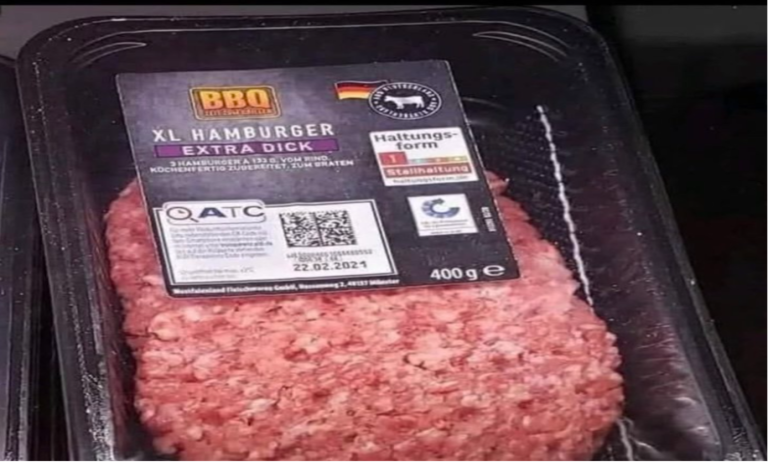
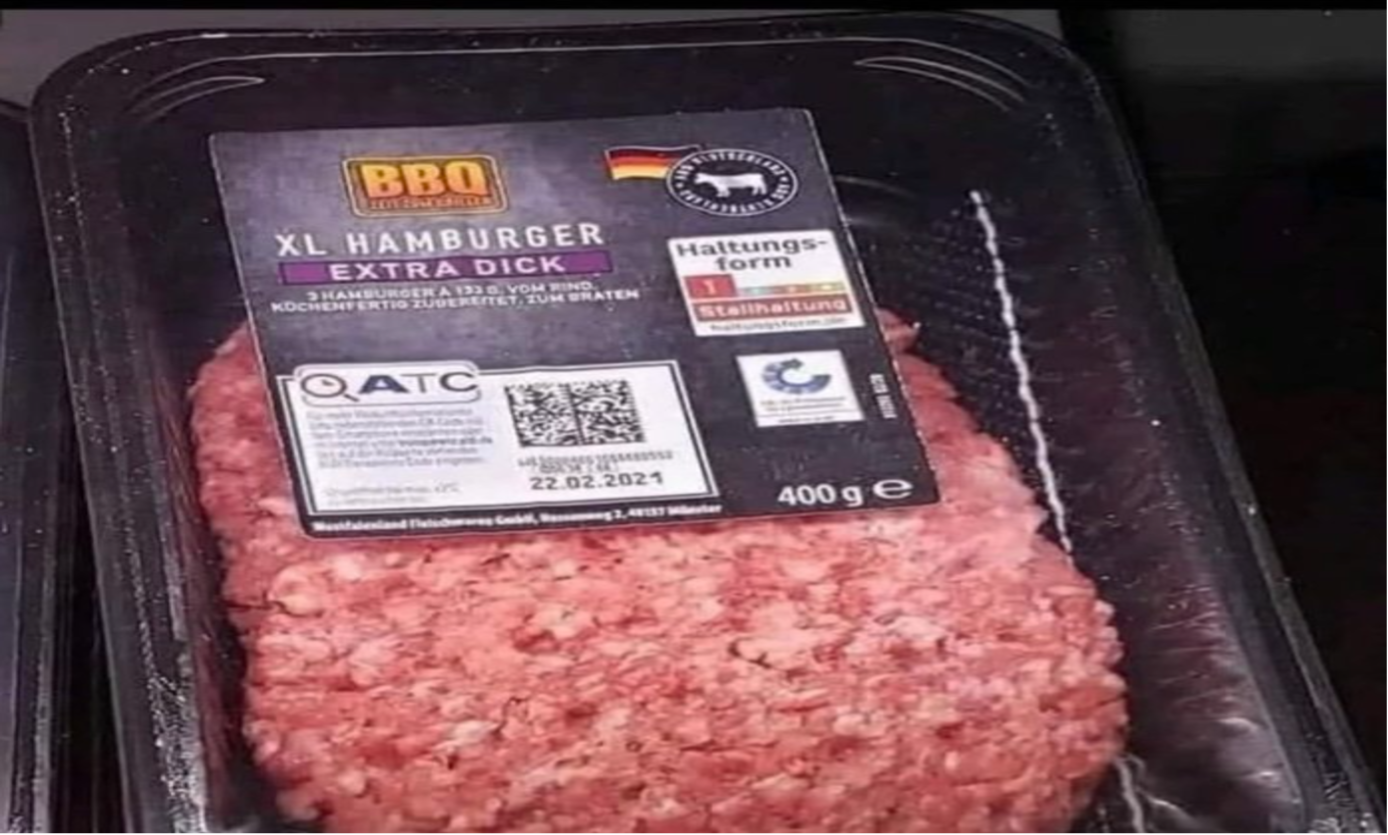
MORRISONS, LEISTON – Shoppers in Suffolk have been urged to return purchases of “German XL BBQ Hamburgers”. After a suspected act of employee sabotage led to what the supermarket is calling an “unprecedented meat anomaly.”
Consumer Correspondent: Colin Allcabs
The burgers, sold in the Leiston branch over the weekend. They were labelled as containing “Extra D*ck” and a whistleblower alleged that one batch may have included more than just beef.
According to sources within the Bavarian supplier. A disgruntled employee – accused by his bosses of adding too much salt to the company’s products – decided to take revenge on his by dismembering his own penis and dropping it int the mincing machine. Gertrude Himmler (Born Bert Hmmler) carried out a self-penectomy with a meat cleaver and threw his detached penis into the mincing machine as he yelled “Wenn Sie keine zusätzlichen Gewürze mögen, nehmen Sie stattdessen extra D*ck!”
Burger my ass
Morrisons has since issued a formal recall, stating: “We take quality control seriously. All of our burgers should contain 100% beef and 0% anatomical ambiguity.”
Environmental health officers are working with local authorities to trace customers who may have purchased the affected burgers. “We’re fairly confident the risk is minimal,” said one inspector. “But just to be safe, maybe don’t fire these up at your nan’s birthday BBQ.”
The incident has prompted a wider discussion about machine access protocols, product labelling, and the dangers of literal translation in post-Brexit Britain.
Meanwhile, Lidl is rumoured to be rushing a rival product to shelves called “Schnitzel Surprise.”
BUNGAY, SUFFOLK – The quiet market town of Bungay, Suffolk, has been thrown into emotional and metaphysical disarray after it emerged that local woman Cheryl Moss’s trans husband, Kyle, is pregnant by her best mate’s Zumba instructor. The child is expected in October, or possibly “whenever Mercury exits retrograde,” according to sources close to the couple.
Entertainment Editor: Arthur Pint
Cheryl, 41, a former tanning technician turned Reiki entrepreneur, described the situation as “emotionally complex, but spiritually enriching.” Her husband Kyle, 38, who transitioned in 2020 and retained reproductive capabilities. He reportedly conceived during what was described as a “brief but vigorous moment of core-strength bonding”. With flamboyant fitness guru Brayden Chase—himself a one-time contestant on Suffolk’s Got Talent (he came third, narrowly beaten by a dog that danced to Meat Loaf).
Pickers knows nothing
The twist? Brayden is romantically linked to Leanne Pickers, Cheryl’s lifelong best friend and fellow spiritual medium. Who claims she was unaware of the Zumba adultery but “had sensed a shift in chakra alignment during that week’s Pilates.”
Local residents have reacted with a mix of bewilderment, support, and a sudden uptick in the sale of decaf herbal teas. “It’s like Jeremy Kyle crossed with The Archers,” said one neighbour, “but with more pronouns and hemp.”
The Moss-Chase-Pickers household is reportedly now working towards a co-parenting arrangement, involving shared custody, vegan baby food, and alternating weekends between Bungay and Brayden’s yurt in Woodbridge.
Cheryl insists there’s no animosity. “This isn’t a scandal,” she told BBC Look East. “It’s a modern miracle, and probably a decent screenplay.”
In unrelated news, Bungay Town Council has announced a new seminar series: Navigating 21st Century Relationships: From Swings to Surrogacy, to be held at the village hall, with free tea and interpretive dance.
BRIZE NORTON AIR BASE, UK – RAF Brize Norton was left red-faced after Palestine Action activists broke into the base and damaged military hardware—including one of the Ministry of Defence’s last remaining fully functional staplers.
Defence Editor: Doug Trench
The incident has sparked an internal row, with critics pointing fingers at the station’s Commander, Wing Commander Louise Henton, accusing her of creating a “paperclip culture of ethical indecision.”
Henton, a former career Personnel (Support) Officer with a sterling administrative record, is now being held responsible in some circles for what one defence commentator described as a “catastrophic outbreak of clipboard warfare.” Her inability to fly a plane, or indeed even reverse a truck, has been highlighted as emblematic of what some allege is the RAF’s declining “combat-first” mindset.
RAF Base
Fuel has been added to the bonfire of Henton’s legacy by resurfaced academic work: her award-winning thesis on human rights abuses by Western forces at Abu Ghraib and in the death of Baha Mousa. The thesis, written during her time at the Advanced Command and Staff College, boldly questioned the “bad apple” defence and dared to suggest that military culture itself might be to blame for systematic abuse.
Blue sky thinking
“She was more concerned about moral erosion than airfield perimeter fencing,” one anonymous squadron leader muttered over a Ginsters pasty. “You don’t stop saboteurs with Kantian ethics and a Masters from King’s.”
While the MoD has neither confirmed nor denied whether any aircraft were harmed during the protest, a confidential source reports the only real casualty was “a Tornado display model and several officers’ egos.”
DEI hire Henton declined to comment, though sources say she has submitted a strongly worded memo—on recycled paper.
HOLLYWOOD, CALIF. – Beverly Hills was the unlikely site of a celebrity standoff this week, as Hollywood actress Scarlett Johansson and 90s boyband Hanson found themselves locked in a tense identity crisis in the waiting room of renowned cosmetic surgeon Dr. Gupta Bophal.
Entertainment Editor: Arthur Pint
Witnesses say the confusion began when Dr. Bophal entered the minimalist-chic clinic lounge and calmly called out, “Johansson.” What followed was chaos, as not only Scarlett Johansson stood up, but so did all three Hanson brothers—Zac, Isaac, and the lesser-known Terry—apparently convinced the call was meant for them.
“We heard ‘Yo! Hanson!’ clear as day,” insisted Isaac, pointing to his ears. “It’s a common greeting for us. We’re used to fans shouting that exact phrase.”
A 20-minute debate followed, in which Scarlett Johansson repeatedly clarified that she was, in fact, the Johansson in question, while the Hansons refused to back down, accusing Dr. Bophal of ‘Jive Talkin’’ until the surgeon explained, slowly and with hand gestures, that he had not said “Yo! Hanson” but merely “Johansson.”
Toe to toe
Once calm was restored, the doctor proceeded to treat Johansson, who is reportedly undergoing surgery to add a sixth toe in preparation for her upcoming biopic Marilyn: The Chiropody Years, an imagined account of Monroe’s foot-focused personal journey.
Meanwhile, the Hansons are allegedly undergoing an ambitious set of procedures to help them resemble the 1970s Bee Gees “in bone structure, hair volume, and general aura,” as per their publicist.
Dr. Bophal has since installed a whiteboard in the waiting room to clarify patient names, and insists the mix-up was “a simple case of ‘me first’ celebrity egotism.”
5G is the latest generation of mobile Internet connection. It was launched to provide improved connection speeds, reduced lag, and greater bandwidth than 4G, which itself was an improvement over 3G.
It was deemed a necessary upgrade considering the proliferation of IoT or smart home devices, as well as technologies like VR and AI. For users living in remote areas, it can provide access to advanced Internet connections where no connection could be acquired previously.
Mobile Internet Connections
The majority of people have access to smartphones, requiring improved Internet connections so we can check emails, scroll social media, play games, and play at online casinos, including those with no Gamstop restrictions.
According to online betting expert Brett Curtis, more casinos now offer mobile apps and mobile-optimized websites, making 5G connectivity even more beneficial to players who want seamless connections to large game libraries and extensive bonuses.
5G Coverage
Ofcom estimates that around 90% of UK households could get outdoor 5G connections, although this does depend on locale and other factors, and evidence suggests this figure might be quite generous compared to real figures. However, where 5G is available, it does generally offer several benefits over 4G.
Improved Internet Availability
Rural areas have long struggled to get decent Internet coverage. The relatively low number of users and the high cost of infrastructure required to deliver high-speed broadband to remote users mean a lot of houses and businesses in rural areas have missed out on reliable broadband. While the government has attempted to improve the situation, the fact remains that a lot of UK users still miss out.
Around two-thirds of Suffolk is classified as rural, which means this problem is relevant to a lot of Suffolkers. Because it is a mobile Internet connection, 5G does not have the same installation and infrastructure requirements as fibre broadband, which makes it more accessible and more convenient.
Rural Use Cases
5G, like 4G and other previous versions of mobile Internet connections, uses cellular network technology. However, it uses a broader range of radio frequencies. The latest generation of cellular technology was deemed necessary thanks to the greater availability of smart home technology and Internet of Things devices.
For many of us, that means using smart speakers and connected kitchen devices. But, for some businesses, it can be integral to their daily operation. Per plant farming, or precision farming, for example, means collecting data on individual plants on farms and then utilizing this precise data to better manage plants and ensure greater crop yields.
This method of farming is better for the farmer, consumers, and even the environment, but it requires the reliable collection and distribution of data from across the farm, data that is collected via mobile connections. This kind of data collection can’t feasibly be done using traditional wired Internet technology, and even 4G connections can struggle to handle enough data quickly enough.
5G technology makes per-plant farming a viable solution. And, per-plant farming is just one example of how 5G can help rural businesses. Businesses of other types can also benefit from improved mobile connectivity.
5G Benefits Over 4G
Mobile connections are used for everyday communications like email, as well as for connecting to the Internet. For businesses located in large towns and cities, this communication isn’t typically an issue. Broadband connections are easily found. For other businesses, 4G might be available, and is still the most commonly found mobile connection type. But 5G offers benefits over earlier versions.
Speed, Connection, And Latency Improvements
4G was considered truly mobile broadband. It offered speeds of around 40Mbps. The most notable improvement experienced with a 5G connection is that its download speed has increased to 20 Gbps, which is around 100 times faster. Similarly, it also has approximately 100 times the network capacity.
This increase in capacity means more devices can connect to the network, and it also makes mobile broadband networks a usable option for remote businesses. Latency, or lag, was measured at approximately 60 milliseconds with 4G, but this was reduced to closer to 6ms. In terms of numbers, 5G is around 100 times more effective and efficient than 4G.
Improved Technology
5G networks started launching in 2019, with more networks coming online in 2020. The huge improvements meant that we saw a lot of new networks and network operators enter the market. In fact, the rate of take-up by operators was much quicker with 5G than with previous versions. 4G could be viewed as the trailblazer that set the tone, but it was 5G that honed the technology, made it viable, and offered greater access to all. But, with that said, it still isn’t available for everybody.
5G Problems
Not all areas have access to 5G yet. It is estimated that around 90% of the UK has 5G coverage, but those in very remote areas might still struggle. What’s more, this figure pertains to outdoor coverage. Indoor coverage can be more challenging.
Connection depends on factors like the local environment, as well as the indoor environment. Users who can get a connection from outside their property might still struggle to get an indoor connection.
Next G
Even though 5G hasn’t been completely rolled out yet, there is already talk of 6G. The technology is likely to be nearly a decade away, but 5GA has started to roll out in some countries. It uses AI and machine learning to optimize network connections, which will likely be a standard feature of 6G connections. It reduces service interruption times and improves connection quality for IoT devices.
Companies in Finland and China have shown off 5GA connections, and networks are starting to be deployed in these countries. As a buffer between existing 5G and future 6G technologies, it is not yet clear how popular 5GA will prove – it may remain more of a theoretical technology used to show how the next generation will advance our mobile Internet lives.
London, United Kingdom – Golden-Panda.org, a specialised review and comparison platform for online casino gaming, has officially launched to serve UK players. The platform addresses the growing demand for trusted casino information while helping British players navigate the evolving landscape of offshore gaming options available to UK residents in 2025.
Golden Panda is committed to transparency, player education, and helping UK users make informed decisions about casino gaming platforms available to British players.
The platform is live at https://golden-panda.org/ and features comprehensive reviews of verified casino platforms specifically evaluated for UK player accessibility and gaming quality.
Platform Addresses Critical Need for Trusted Casino Information
Golden-Panda.org emerges at a pivotal moment for UK casino gaming. With the offshore casino market expanding significantly and UK players increasingly seeking alternatives to traditional UKGC-regulated sites, the platform addresses the specific needs of British players seeking reliable, comprehensive casino evaluations and expert guidance.
“UK players deserve access to transparent, detailed information about the casino platforms available to them,” said a spokesperson for Golden-Panda.org. “Our platform bridges the information gap by providing thorough analysis of offshore-licensed casinos that welcome UK players, focusing on security standards, game quality, and fair play practices that matter most to British players.”
Comprehensive Casino Analysis and Expert Evaluation Methods
Detailed Casino Assessments for UK Players
What distinguishes Golden-Panda.org is its specialised focus on platforms accessible to UK players, with particular expertise in evaluating offshore-licensed casinos. The team recognises that many quality casino platforms operate under international licenses rather than UKGC regulation, and conducts thorough assessments of each platform’s gaming infrastructure, security measures, and player experience accordingly.
Key evaluation criteria include:
Game library quality and diversity from leading software providers
Security protocols and encryption standards for UK players
Deposit and withdrawal processes optimised for British players
Bonus terms and promotional value specifically for UK customers
Customer support availability during UK time zones
Mobile compatibility and user experience testing
International licensing status and regulatory compliance
Payment method availability including UK-friendly options
Navigating International Gaming Options and Player Protection
Addressing the UK Casino Gaming Environment
The platform acknowledges that UK players accessing offshore casino sites operate within a complex regulatory framework, and provides clear guidance about considerations while focusing on platforms that maintain exceptional security and fairness standards. Golden-Panda.org emphasises the importance of informed decision-making and responsible gaming practices.
The platform highlights important considerations for UK players:
International Licensing: Comprehensive information about Curaçao, Malta, and other respected international licensing authorities
Security Standards: Detailed analysis of SSL encryption, fair gaming protocols, and financial security measures
Banking Solutions: Expert guidance on cryptocurrency options, e-wallets, and traditional banking methods available to UK players
Bonus Evaluation: Professional analysis of promotional terms, wagering requirements, and real value for UK players
Tailored User Experience for British Casino Enthusiasts
Understanding that UK players have specific preferences and requirements when accessing casino platforms, Golden-Panda.org categorises platforms based on UK-relevant factors such as GBP currency support, British-friendly customer service, and platforms offering optimal experiences for players from jurisdictions with traditional gaming preferences.
Every casino assessment covers:
Real gameplay testing from UK IP addresses and networks
Mobile performance evaluation on UK network providers
Customer support response time testing during UK business hours
Bonus value analysis with GBP equivalent calculations
Withdrawal testing and processing time verification for UK players
Game library accessibility and performance testing
Security verification and UK player accessibility confirmation
Supporting Informed and Responsible Casino Gaming
Beyond reviews, the platform provides educational content specifically relevant to UK players, including guides on responsible gaming practices, understanding international licensing standards, and safe online casino selection criteria. The platform maintains current information about the UK regulatory environment and international developments affecting British players.
Commitment to Responsible Gaming Excellence
Golden-Panda.org recognises that many quality casino platforms operate outside UKGC regulations and therefore don’t participate in the UK’s GamStop self-exclusion programme. The platform emphasises responsible gaming practices while providing comprehensive information about available casino options, including guidance on setting personal limits, understanding gaming risks, and recognising when gaming habits require attention.
The platform provides detailed information about responsible gaming tools available on reviewed platforms and maintains educational content about safe gaming practices specifically tailored for UK players accessing international casino sites.
About Golden-Panda.org
Golden-Panda.org is a specialised casino review and information platform launched in 2025, focusing exclusively on providing UK players with comprehensive, expert analysis of casino gaming options. The platform combines detailed technical evaluation of gaming infrastructure with traditional casino assessment criteria, while providing clear guidance about the regulatory landscape affecting UK players accessing international casino platforms.
Golden-Panda.org is committed to transparency, player education, and helping UK users make informed decisions about casino gaming platforms available to British players.
Visit https://golden-panda.org/ for comprehensive casino reviews, expert analysis, and professional guidance on casino gaming options available to UK players.
SUDBURY, GREAT BRITAIN – The Red Baron crash-landed a vintage Messerschmitt Bf 109 right in the middle of Sudbury High Street yesterday afternoon.
Defence Editor: Doug Trench
Von Richtofen, who apparently prefers the title “Herman, Avenger of Family Honor,” touched down with what witnesses described as “a bumpy landing resembling a toddler’s first attempt on a tricycle.” The unexpected arrival was preceded by a public declaration that he intended to single-handedly refight both World War I and World War II, citing “unfineeshed bizness” and “a deep family tradition of ze aerial heroics.”
The historic aircraft, restored to near-pristine condition, came to rest blocking a disabled parking space directly outside the Helen Rallason charity shop. Much to the dismay of shoppers and the local branch of the Mobility Scooter Enthusiasts Society.
Dogfight
Local police armed with dogs promptly escorted the self-styled “Last Luftwaffe Lord” away, pending deportation back to Frankfurt, where officials were reportedly unaware of any new aerial battles planned for the 21st century.
Onlookers were divided in their reactions. “It was like seeing history crash-land into modern life—literally,” said one elderly resident. “Though I can’t say I appreciated my weekly shop being blocked by a vintage warplane.”
As for Herman Goebbels Von Richtofen, he remains unrepentant, reportedly already drafting plans for a solo blitzkrieg reenactment over the local cricket pitch. Authorities have advised residents to keep an eye on the skies—and their parking spots.
WORKSOP, NOTTINGHAMSHIRE – Shrek and Fiona stunned fans by renewing their marriage vows live on stage at the Acorn Theatre in Worksop, UK. The green power couple, currently touring with Shrek the Musical, took a detour from their usual script to declare — once more, with feeling — that theirs is a love that’s truly “ogre and ogre again.”
Entertainment Editor: Arthur Pint
Following a thunderous curtain call and standing ovation for the sold-out performance, the lights dimmed and a hush fell. Then, to the astonishment of onlookers, Shrek (played by a deeply committed actor in 40 pounds of latex) dropped to one mossy knee and proclaimed, “Fiona, even after all these years, you still make my swamp heart skip a beat.”
Fiona, beaming beneath prosthetic ears and a lovingly applied green complexion, replied, “And you, my love, still know how to clear a room — emotionally and physically.”
Tickets still available
The ceremony included a spontaneous bouquet toss (caught by a woman dressed as Donkey), a re-promise of “in flatulence and in health,” and a duet of Bonnie Tyler’s Holding Out for a Hero that had one pensioner in the front row weeping into her meat pie.
The Acorn Theatre confirmed the vows were not part of the script but rather a personal moment shared with fans “because love, like onions, has layers.”
Local Worksop councillors have since offered the couple honorary residency, while Greggs has announced a limited-edition “Swamp Slice” in their honour.
Asked afterward how he felt, Shrek declared, “I’m not a lovey-dovey — I’m a believer.”
And with that, the ogres left the stage — hand in hand, snout to snout, back to the swamp and ready to take on Act II of forever.