
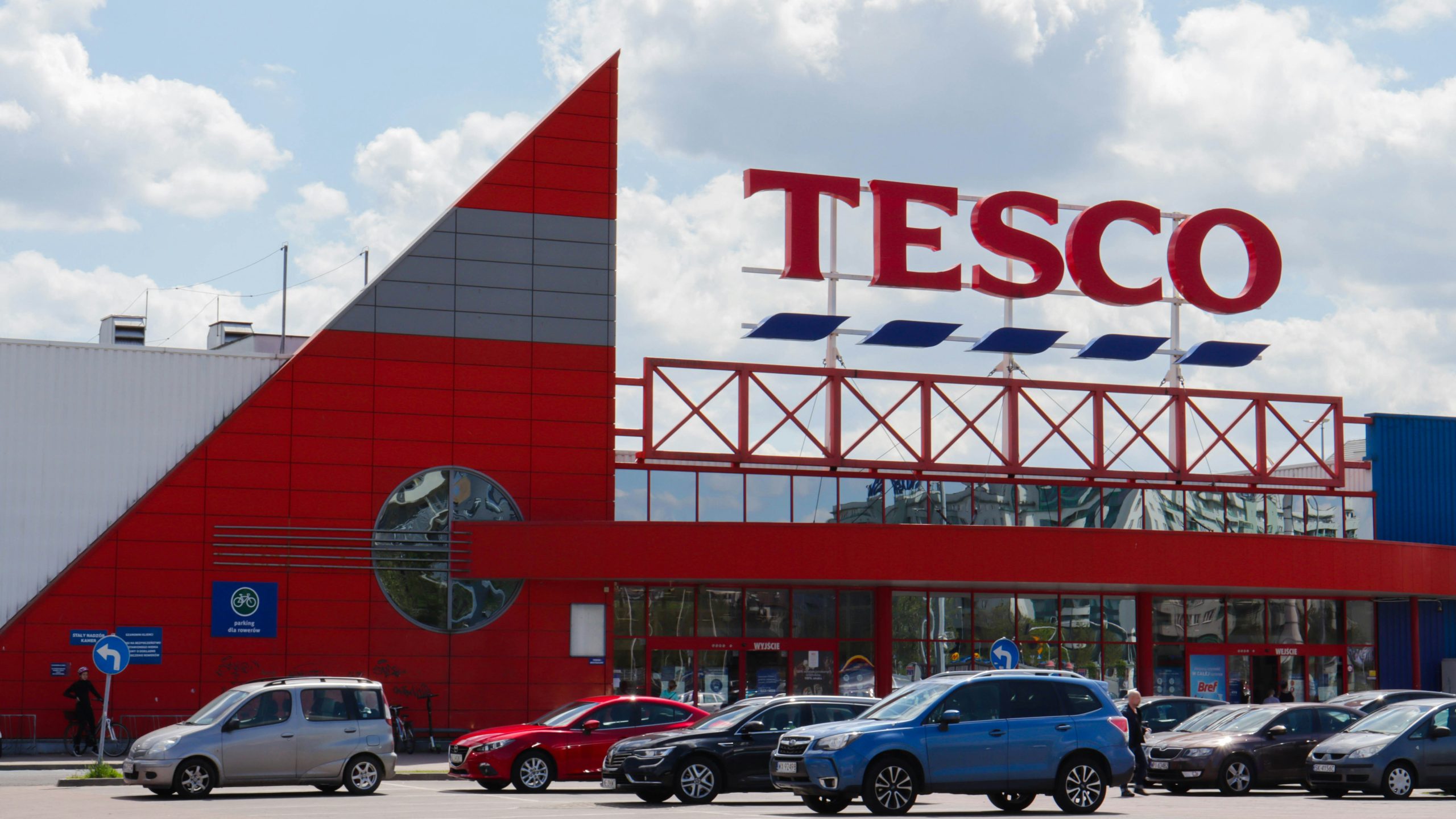
Tesco World Cup sales skyrocket as office workers buy entire aisle of lager for ‘remote meeting’ and leave one branch looking, according to witnesses, “like the drinks aisle had hosted Glastonbury and lost”.
By Our Norfolk Reporter: Ian Bred
Shoppers at the Tesco Extra on the outskirts of Ipswich said the scenes began shortly after an email marked Urgent: Quick Catch-Up was circulated across several local offices, public sector departments and one suspiciously well-funded regional consultancy whose entire business appears to involve saying the phrase “moving forward” in barns converted into meeting space.
Within minutes, men in quarter-zips, women carrying work laptops the size of serving trays and at least one person still wearing a security pass from 2019 were seen converging on the alcohol section with the calm purpose usually associated with military exercises or middle aisle reductions at Lidl. By 10.43am, the lager shelves had been stripped so thoroughly that one store worker said he briefly thought Tesco had “gone halal by accident”.
Tesco World Cup sales skyrocket as workers redefine hybrid working
The purchasing frenzy is understood to have been triggered by England’s latest World Cup fixture falling awkwardly between a 9.30 pipeline review and a 1pm stakeholder alignment session, forcing Britain to do what it does best in times of national strain – pretend football is work if described badly enough.
According to customers, several buyers approached the tills insisting the lager was essential business equipment. One man in a gilet reportedly referred to two slabs of premium pilsner as “collaboration tools”. Another, who bought enough crisps to cater for a minor by-election count, said he was “just facilitating a remote meeting environment” before winking so hard he nearly had to sit down.
Store manager Clive Ransome, 54, gave a statement in the flat, haunted tone of a man who has spent most of his career explaining to the public why there are no baskets left.
“We noticed unusual purchasing patterns,” he said. “Normally World Cup demand builds steadily over the day. This was different. These were office workers operating with intent. They came in teams. One seemed to have a procurement strategy. Another had a spreadsheet. A third kept saying, ‘Get the Peroni, Sharon, this is client-facing.'”
He added that the branch had experienced shortages in lager, dip, ice, frozen beige food and those tiny cocktail sausages people buy when they want to feel middle class while eating eight of them over the sink.
The ‘remote meeting’ that apparently required 96 cans
Though no single company has accepted responsibility, local sources say a number of firms had encouraged staff to “remain available online” while also “being realistic about engagement during this culturally significant event”, which in practical terms translated to sticking a webcam on, muting at intervals and making occasional noises such as “good point” while Gareth Southgate attempted to rescue the economy.
One office administrator from Stowmarket, who asked not to be named because she had told HR she was visiting a dentist with “complex gums”, described the operation with admirable candour.
“We were told there’d be a remote meeting to discuss priorities,” she said. “Then someone posted a pub emoji, a football emoji and a GIF of a man carrying twelve cans into a wheelie bin. At that point we understood the brief. It wasn’t exactly formal, but then neither is Darren from accounts after his third Madri.”
Neighbours in several Suffolk streets reported hearing the familiar daytime soundtrack of modern employment – laptops pinging, doors opening, children being told to keep it down because Daddy is on a call, followed immediately by a roar loud enough to suggest Daddy’s call was with Jude Bellingham.
Energy analysts said domestic electricity usage spiked shortly before kick-off as thousands of workers across East Anglia switched on televisions under the legal fiction of “screen sharing”. One man in Felixstowe allegedly mounted a 55-inch telly behind his desk and told colleagues it was “for dashboards”.
Managers respond with dignity, panic and selective blindness
Employers have been keen to stress that productivity remains strong, provided it is measured in WhatsApp messages, speculative line-up discussions and people replying “Thanks” to emails they plainly have not read.
A spokesperson for a regional insurance firm said staff were trusted to manage their own time responsibly, before clarifying that “responsibly” did not extend to chanting in breakout rooms, nominating the intern as drinks captain or changing their out-of-office message to “At a strategic offsite near the fridge”.
Middle managers, meanwhile, have found themselves trapped in a familiar national dilemma. Enforce standards too firmly and you become the office villain who hates football and possibly Britain. Relax them too much and Nigel from compliance appears on camera in a bucket hat asking if half-time counts as annual leave.
One team leader from Bury St Edmunds admitted the situation had got away from him.
“I tried to keep it professional,” he said. “I scheduled a performance touchpoint for 11. Then everybody joined with cans just off camera. You could hear them opening one by one like a sort of administrative rainstorm. By noon someone had changed the meeting title to Q4 Penalties and Forecasting. Frankly, it worked better than our usual calls.”
Tesco staff report advanced levels of patriotic nonsense
Employees at the affected store say the surge was not merely about volume but attitude. By lunchtime, several customers had begun speaking to checkout staff with the grave urgency of wartime ministers.
“One bloke leaned in and asked if we had any emergency Stella in the back,” said retail assistant Megan, 22. “I said we had some own-brand lager left and he looked at me as if I’d offered him a warm pond. Another bought red and white paper plates and told me he was ‘supporting the lads through presentation strategy’. I still don’t know what that means.”
The bakery section was also said to be under pressure after workers sought “meeting food” in quantities usually associated with funerals, christenings or a surprise visit from in-laws. Sales of sausage rolls, scotch eggs and party rings reportedly rose so sharply that one shelf stacker briefly assumed a wedding had taken place in the car park.
Tesco has not confirmed exact figures, but insiders claim one branch sold more lager before noon than during an average Bank Holiday Saturday. Economists are said to be studying the event as a case of spontaneous, football-induced retail stimulus, in which national morale is briefly converted into pilsner, hummus and six types of oven chip.
A perfect British storm of football, work and supermarket logistics
There is, of course, something almost noble about the whole affair. Britain has always excelled at informal systems built on nods, euphemisms and a shared agreement not to inspect the obvious too closely. The remote meeting is simply the latest refinement of this proud tradition. Once, people slipped out early for the match after mentioning “an appointment”. Now they remain technically online while buying enough lager to float a rescue craft.
What makes this particular episode so believable is that it sits squarely inside modern office life, where the language of productivity has become so inflated that almost anything can be smuggled through it. A beer run becomes resource planning. Watching the match becomes stakeholder monitoring. Yelling at the referee in your conservatory becomes an agile response to changing conditions.
And in fairness, there are trade-offs. Some staff no doubt worked later to make up for it. Others probably did answer emails at half-time, albeit with the emotional clarity of a man eating cold pizza in a replica shirt. A few, perhaps the true professionals, managed both a full day of labour and a regulated number of cans. Britain still produces such people, though usually not in marketing.
By late afternoon the Ipswich branch had restocked the aisle, though workers said shoppers continued arriving with the furtive urgency of people pretending not to be in on the same joke. One carried a headset and repeatedly said, to no one in particular, “This is for a call.” Another purchased four packs of lager, three bags of ice and a novelty England wig, then asked whether any of it counted for Clubcard points under office supplies.
For now, life has returned to normal. The shelves are fuller, Teams statuses are green again, and several companies are believed to be conducting serious internal reviews into why so many project updates contained the words “come on” and “ref’s a disgrace”. Yet the lesson will linger in boardrooms and break rooms alike.
When the next big match lands awkwardly inside the working day, no policy document on earth will stop the British public from transforming football into admin. If employers want honesty, they should simply schedule fewer meetings and more common sense. If supermarkets want to prepare, they might start by moving the lager nearer the stationery.