
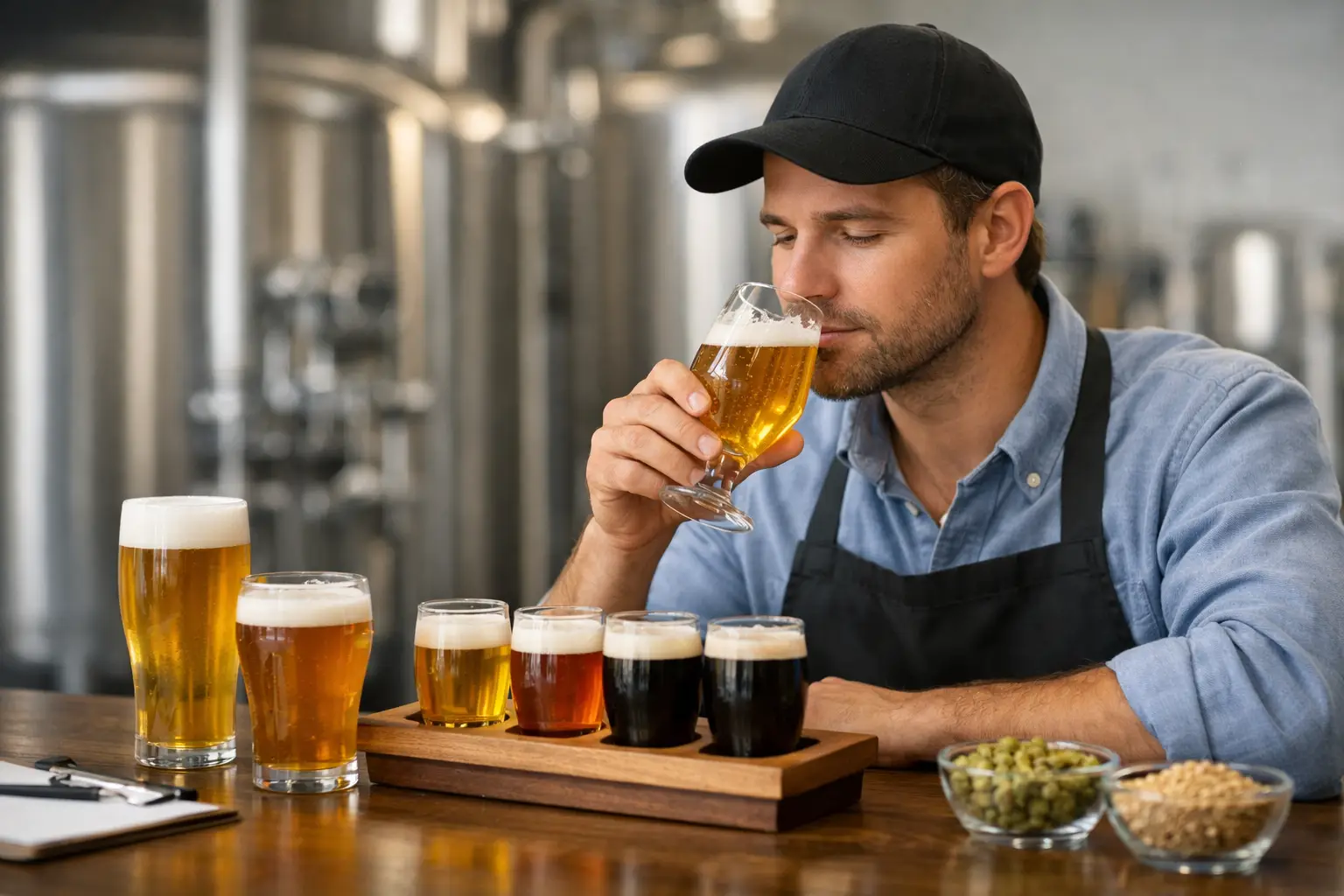
Clive from Stowmarket had already described a pale ale as “having the emotional depth of a parish council row” and asked for another half “for verification purposes”. This, he insists, is the life of the professional beer tester – a role that sounds invented by an uncle in a fleece but is, annoyingly, close to a real thing.
For anyone who has ever stared into a pint and thought, I could absolutely do this for money, there is both good news and administratively disappointing news. Yes, breweries, pubs, distributors and competitions do need people who can assess beer properly. No, this does not mean turning up to The King’s Arms on a Tuesday, ordering six pints and calling it research while your mates applaud your commitment to industry standards.
What a professional beer tester actually does
A professional beer tester, at least in the sober daylight definition, evaluates beer for flavour, aroma, appearance, texture and consistency. That might happen in a brewery quality control lab, at a tasting panel, during product development, or in judging at organised competitions where men named Graham say things like “slight diacetyl issue” with the gravity of a defence briefing.
The job is less about drinking and more about noticing. Can you detect oxidation? Is the carbonation right for the style? Does that porter taste beautifully roasted, or like someone has rinsed a bonfire through a sock? A good tester is trained to spot faults as quickly as they spot strengths.
This is why the fantasy of endless pub-based employment tends to collide with the reality of small pours, note-taking and the occasional need to spit. That last bit causes the most heartbreak. Many a hopeful applicant has been enthusiastic until the moment they learn that a professional environment does not always reward necking an entire pint and then announcing, “Very nice, that.”
How one becomes a professional beer tester
There is no Hogwarts for lager, although parts of Norfolk have come close after cider festivals. Most people move into beer tasting through brewing, hospitality, food and drink judging, or specialist training in beer styles and sensory analysis. Some start as brewers and learn to assess quality because that is part of making anything drinkable. Others come from pubs, bottle shops or distribution and build expertise the slow way, by tasting widely and remembering what they tasted.
There are courses, certifications and judging pathways, and they all sound far less glamorous than they should. Sensory training often involves blind tastings, identifying off-flavours and learning the technical language of beer without sounding like someone who has just discovered a beard comb. If you want to be taken seriously, you need a decent palate, discipline and a tolerance for discussing yeast behaviour before lunch.
It also helps to understand style guidelines. A hazy IPA is not judged like a bitter, and a stout is not meant to behave like a sunny continental pilsner. The professional beer tester who cannot tell the difference will eventually be found out, usually by somebody in corduroy who owns at least one branded tasting glass and considers himself a public service.
The skills nobody mentions in pub chat
Memory matters. So does honesty. If the beer is poor, someone has to say so, ideally without starting a diplomatic incident in the taproom. You also need consistency. A beer that tastes brilliant one week and oddly cabbage-like the next is not a characterful artisan flourish. It is a problem.
Communication matters too. In a proper role, you are not merely saying whether you like a beer. You are explaining why it works, why it fails, and what should change. That makes the job closer to analysis than indulgence, which is a tragic sentence for anyone who hoped the nation’s breweries were staffed entirely by cheerful wasters with foam on their upper lip.
Is there money in professional beer tester work?
There can be, but nobody should buy a speedboat on the strength of a tasting paddle. Full-time jobs exist in brewing and quality assurance, and those roles may include tasting as part of broader responsibilities. Beer judges may be paid in some settings, though many do it for prestige, passion or the deeply British satisfaction of being officially allowed to complain.
The pure fantasy version – salaried employee, all day in a pub, occasional nodding – is rarer than a quiet bank holiday garden centre. Most paid work sits inside a larger drinks career. You might work in production, product development, education, retail, writing or events, with tasting folded in rather than presented as a golden throne of hops.
That said, if your talents include a refined palate, good writing and the ability to remain coherent after discussing saison fermentation with strangers, there are ways to build a niche. The trade likes specialists. It is just less keen on people whose main qualification is having once declared a supermarket lager “surprisingly moreish” during a barbecue in Ipswich.
The biggest myth about the professional beer tester
The biggest myth is that loving beer is enough. It is not. Plenty of people love beer. Plenty of people also love chips, and that does not make them senior potato auditors.
Professional tasting relies on structure. You taste with purpose. You compare. You record. You identify patterns. You keep your senses sharp, which can mean limiting what you drink, when you drink it and how much. It is, frankly, rude news for anybody treating this as an excuse to become a legend at the local.
Another myth is that the role is all craft taps and cheerful brewery tours. Sometimes it is. Other times it is repeated testing of the same beer batch, calibration exercises, paperwork, sanitation protocols and the deeply humbling discovery that your favourite brew contains a flaw once somebody points it out. After that, you can never untaste it. It is the drinks equivalent of noticing a crack in the living room ceiling and then seeing nothing else for months.
Why breweries need proper tasters
Beer is agricultural, chemical and a tiny bit theatrical. Ingredients vary. Storage matters. Packaging matters. Temperature matters. Human error definitely matters. A brewery cannot rely solely on machinery and wishful thinking. It needs people who can catch issues before customers do.
That is where trained tasting panels earn their keep. They protect consistency, help refine recipes and stop expensive mistakes escaping into pubs where Barry from Bury St Edmunds will immediately take one sip, frown like a man spotting suspicious roadworks, and tell everyone within earshot that standards have slipped.
Tasting also helps with innovation. New beers need feedback before launch. Is that mango sour refreshing or simply confusing? Has the brewer created complexity or committed a fruit-based offence? These are not questions to be settled by vibes alone.
The local pub fantasy versus the real trade
The romantic image remains powerful because Britain likes jobs that sound implausibly pleasant. Professional dog walker. Island caretaker. Crisp consultant. The professional beer tester sits proudly in that category, somewhere between national treasure and obvious nonsense.
Yet the real version is better, in its own way. It rewards curiosity. It values skill over swagger. And unlike the pub boaster’s version, it can lead somewhere tangible if you are willing to learn the craft. You do not need to be snobbish. You do need to pay attention.
That may be the most surprising part. Good beer testing is democratic. It is not about reciting tasting notes like a haunted menu. It is about understanding what is in the glass and whether it is what it ought to be. Sometimes the answer is a glorious yes. Sometimes it is “this tastes like a radiator has become sentient”. Both responses have value.
Should you try to become a professional beer tester?
If you genuinely enjoy beer, have a careful palate and like learning the difference between preference and quality, then yes, it is worth exploring. Taste widely. Read up on styles. Visit breweries. Attend guided tastings. Practise describing what you notice without resorting to “nice” or “bit hoppy”. Those words have their place, but not if you want anyone to trust you with a clipboard.
If, on the other hand, the appeal is mostly telling your mates you are basically in the trade because you once reviewed a stout on social media, you may want to lower expectations and raise a sensible half instead.
A professional beer tester is not a pub superhero. He is usually somebody with a trained nose, a decent notebook and the self-control to stop after saying “sample three shows estery imbalance”. That may sound less thrilling than the dream, but it is still one of the better ways to turn good taste into proper work. If you fancy it, start by taking beer seriously enough to ruin it slightly for yourself – that is often how a hobby becomes a craft.