
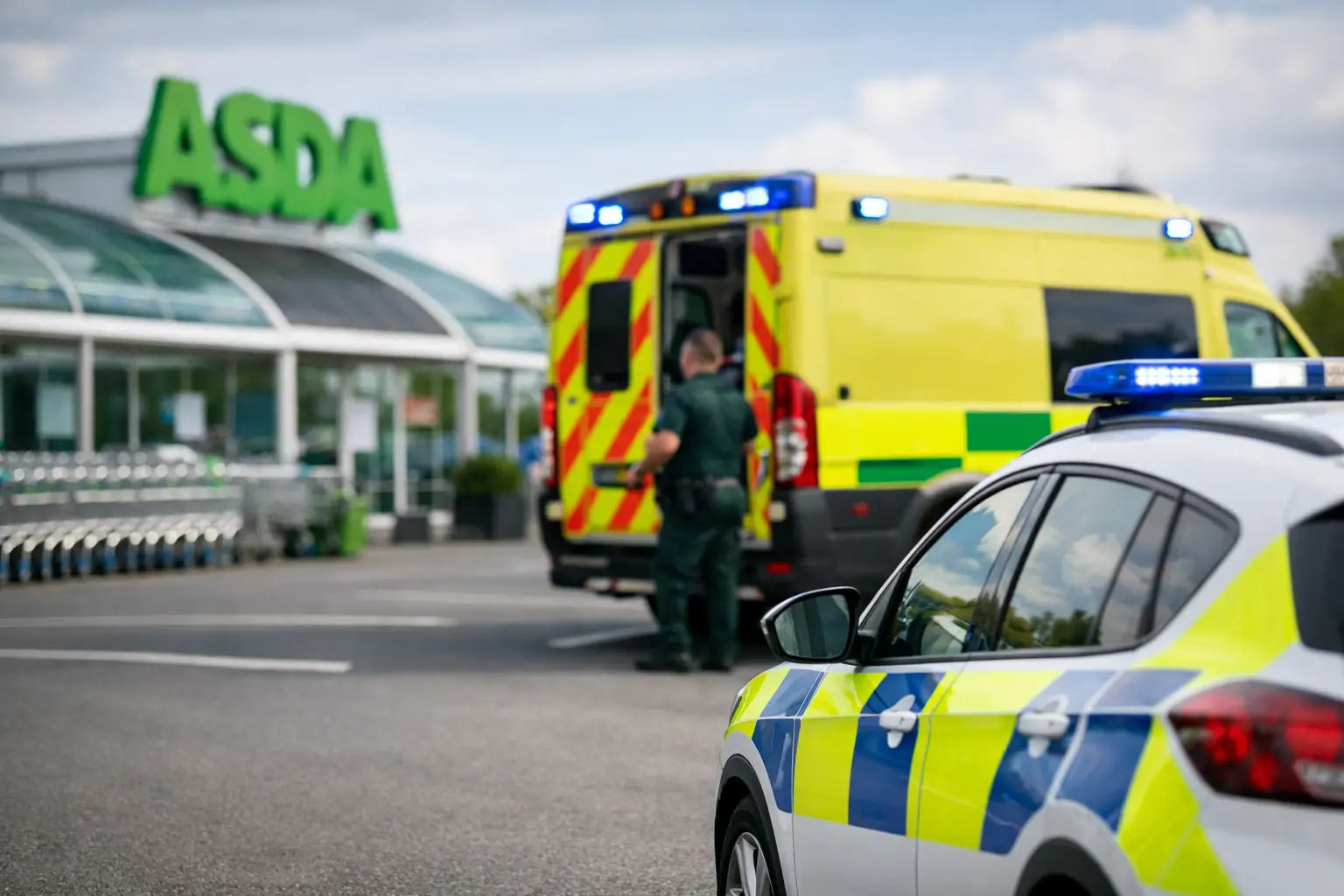
At 5.42pm on a Thursday, when the car park is full, the self-checkouts are bleeping like a minor cardiac ward and someone has abandoned a trolley sideways across frozen peas, Asda stops being a supermarket and becomes a test of national character. It is no longer a place to buy bin bags and a garlic bread. It is a live-action government exercise in patience, compromise and whether a family of five can survive on three meal deals and a dream.
By Our Security Correspondent: Ben Twarters
New figures that nobody asked for but everyone will believe suggest Asda is now performing more frontline civic duties than several district councils, two overstretched parish clerks and at least one minor cabinet minister. Shoppers interviewed outside stores in Ipswich, Lowestoft and the sort of retail park that only appears after a bypass have described the chain as “basically the fourth emergency service”, citing its role in birthday salvaging, barbecue triage and last-minute school project procurement involving glitter, card and parental shame.
Why Asda now feels like public infrastructure
For years, Britain maintained the fiction that supermarkets were simply commercial premises where one exchanged money for goods. That era has passed. Asda, in particular, has become the unofficial national holding pen for all human drama not serious enough for A&E but too urgent for a WhatsApp group.
Need a Colin-adjacent cake by 7pm because someone forgot little Finley’s party and has only just remembered he exists? Asda. Need a white shirt for school tomorrow after discovering your child has used theirs to recreate the Battle of Hastings in poster paint? Asda. Need to buy ibuprofen, a patio set, eight yoghurts, two tyres’ worth of air freshener and a paddling pool the size of Diss? Also Asda.
This is where the institution quietly outgrew its original brief. The modern branch is part grocer, part social observatory, part arbitration chamber. It handles domestic breakdowns with more speed than local government and far less paperwork. If the council can no longer tell you what day your bins go out, Asda can at least sell you thicker sacks and a chocolate éclair for the emotional fallout.
The Asda customer journey, as experienced by the nation
Officials have still not agreed whether the average trip to Asda counts as shopping or an immersive performance. What begins as a quick visit for milk develops, usually within six minutes, into a philosophical negotiation with scarcity, pricing and a child who suddenly wants a watermelon larger than their own torso.
The bakery section remains the closest thing Britain has to a secular place of worship. Men who have shown no prior interest in pastry will stand before iced buns in a trance, as if receiving guidance from a sugared deity. Nearby, couples will conduct whispered budget summits over the precise difference between “little treat” and “financial collapse”.
Then there is the George clothing department, where hope goes to try on a cardigan under fluorescent lighting and comes back changed. George has long occupied a glorious middle ground between practicality and accidental reinvention. You came for school socks. You leave considering a mustard shacket, three novelty pyjama sets and a blazer that makes you look like a divorced gameshow solicitor. That is not failure. That is retail statecraft.
The reduced section, meanwhile, is where Britain reveals its truest self. No institution strips away middle-class performance faster than a yellow sticker at 7.13pm. Teachers, tradesmen, retired colonels, women who own horses, blokes who describe ale as “honest” – all become equal before a 36p focaccia. The nation likes to imagine class remains visible in times of stress. It does not. Not when there is half-price houmous.
Aisle etiquette has collapsed, experts confirm
Social cohesion is perhaps most visibly tested in the middle aisle intersections, where trolley traffic laws are advisory and spatial awareness has gone the way of the village post office. One shopper from Bury St Edmunds was seen attempting a three-point turn near cat litter while another simply parked diagonally and wandered off, apparently to start a new life in household goods.
Asda has, to its credit, adapted. Staff now demonstrate the calm of hostage negotiators. They can defuse a barcode dispute, direct a pensioner to custard creams and explain why the scanner has rejected a courgette, all while being asked where the coriander is for the ninth time in an hour. There are diplomats in Geneva with less demanding briefs.
Asda in Suffolk and the great British retail mood
To understand Asda properly, you have to accept that it is not merely selling groceries. It is curating the emotional weather of the week. A successful visit leaves the shopper feeling prudent, fed and vaguely triumphant. A failed one can produce the kind of existential wobble once associated with poetry or rail replacement buses.
In Suffolk, where people can discuss parking with the seriousness normally reserved for constitutional reform, Asda serves another purpose. It offers a controlled environment in which residents can encounter one another accidentally while pretending not to. This creates the classic county ritual of spotting somebody from sixth form near the onions and both of you responding as if you have been caught in a low-level scandal.
The regional supermarket has also become one of the last places where all tribes meet without curation. Gym lads buying chicken by the kilo. Grandparents buying Werther’s and stern opinions. Students purchasing an ambitious quantity of instant noodles and one lime, as if trying to suggest balance. Middle managers staring into meal deals like men about to choose a second life. If Westminster wants to understand Britain, it should stop commissioning think tanks and spend an hour by Asda’s bakery on a wet Saturday.
There are trade-offs, naturally
Of course, no serious public institution comes without criticism. Some argue the self-checkout has transferred the burden of retail labour onto the customer, turning every shopper into an unpaid trainee with a growing resentment towards “unexpected item in bagging area”. Others point out that the weekly Asda trip has a tendency to swell from £14 to £63 with no visible explanation beyond biscuits, vibes and what appears to be an inflatable flamingo.
And it depends what you need from it. If you require artisanal fennel pollen, emotional validation and a cashier who can discuss heirloom tomatoes, Asda may not be your cathedral. If, however, you need fourteen sausage rolls, paracetamol, a school tie, patio cleaner and a cake with a football on it within twenty minutes, there are few finer expressions of the welfare state in private hands.
The future of Asda, according to people who were near the bananas
Retail analysts, by which we mean three men in fleeces discussing loyalty cards, believe Asda’s future lies in embracing its wider civic role. Proposals reportedly include a designated area for family argument de-escalation, trolley driving tests, and an in-store ceremony where shoppers acknowledge they did not come in for candles but are buying them anyway.
There is also growing support for a formal honours system. Bronze for locating the exact cereal requested by a child who can only identify it by mascot. Silver for surviving the pre-Christmas car park without weeping. Gold for entering Asda on 24 December after 4pm and emerging with pigs in blankets, batteries and dignity still technically intact.
Some campaigners have gone further, suggesting the chain should be allowed to issue minor legal rulings. Nothing dramatic. Just practical matters. Queue disputes. Birthday cake emergencies. Whether a man in sliders may wear them in February. The public increasingly trusts Asda to settle these questions because, unlike most institutions, it has actually seen Britain as it is – peckish, tired, mildly annoyed, and in urgent need of oven chips.
There will always be snobs who insist a supermarket is only a supermarket. These people are usually the same ones who think village fetes are about jam rather than passive-aggressive warfare. The rest of the country knows better. Asda is where domestic plans are rescued, class barriers briefly dissolve and the weekly shop turns into a piece of accidental national theatre.
If you want to understand modern Britain, skip the panel shows and manifesto launches. Go to Asda at teatime, stand quietly near the reduced sandwiches, and watch the whole country negotiate with itself over garlic bread, logistics and pride.