
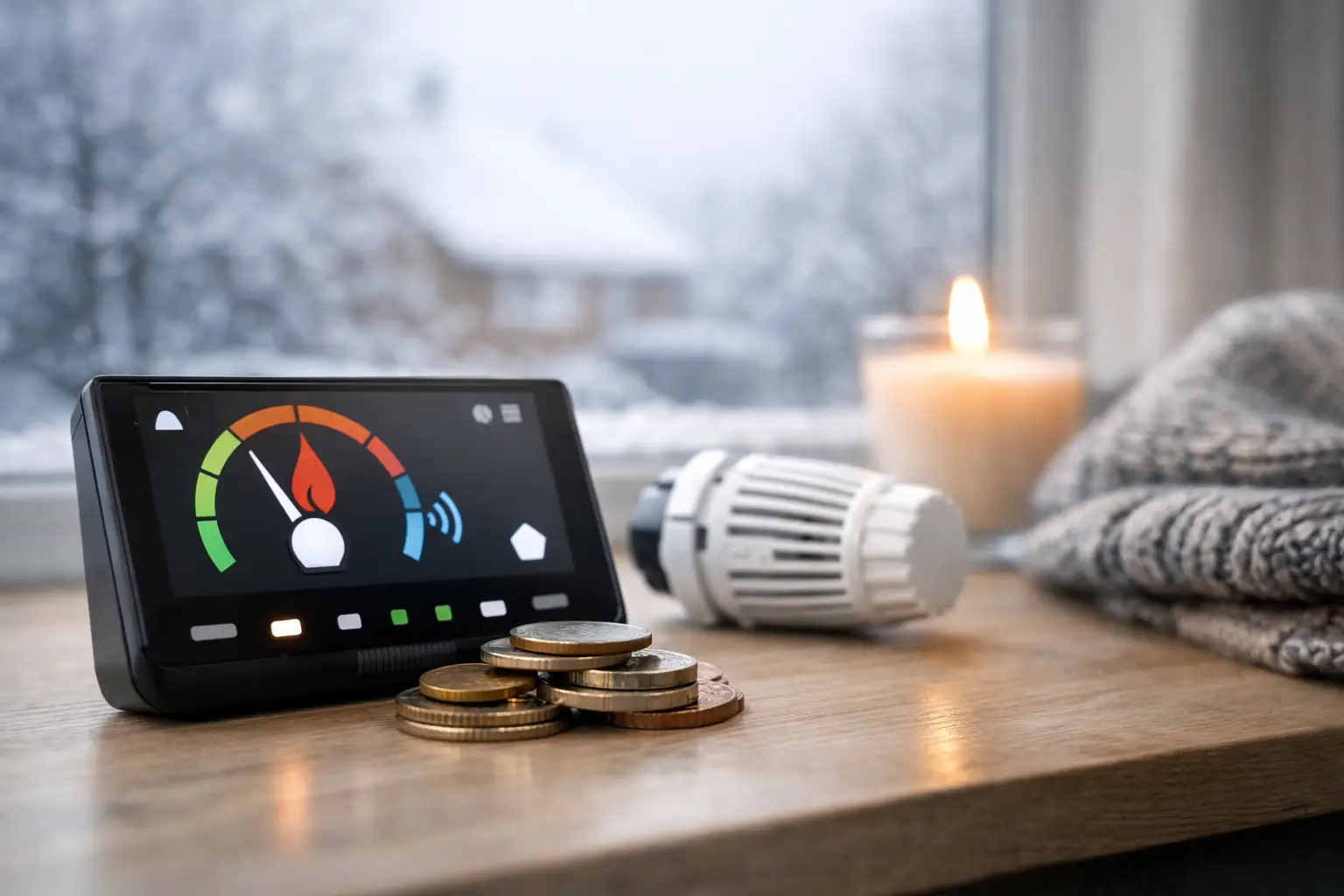
Britain had reached the familiar stage of national panic as smart meter winter energy surge automatically doubles bill standing charges. Millions of householders reportedly watched the little screen in their kitchen flash a number so alarming that several assumed it was displaying the outside temperature in Canada.
By Our Consumer Correspondent: Colin Allcabs
The new system, according to entirely convincing notices printed in lettering the size of a receipt apology, detects when a household says, “Bit nippy, isn’t it?” and immediately doubles the daily standing charge. The charge then remains in place until March, or until somebody’s dad turns the thermostat down by half a degree while announcing that nobody needs “all this central heating palaver”.
Energy firms insist the measure is not a punishment. It is, they say, a Seasonal Warmth Readiness Contribution, designed to help maintain the nation’s supply of electricity, gas and vaguely apologetic hold music. Critics have pointed out that this is the same thing as a standing charge, except it now wears a scarf.
Smart meter winter surge doubles standing charges
Under the new arrangements, smart meters allegedly use advanced predictive technology to identify costly winter behaviour. Boiling a kettle after 4pm is classed as “tea-time peak recklessness”. Putting socks on a radiator triggers the domestic-laundry resilience tariff. Switching on the big light, meanwhile, is recorded as a declaration that the household has “given up pretending it is still summer”.
The meter does not actually need to know how much energy has been used. It simply listens for emotional cues. A sigh near the boiler may add 40p. Asking whether the heating has come on yet can generate an administrative fee. Saying “we pay enough for this place” into the hallway is believed to activate the premium customer engagement rate.
At a press conference held beside a large chart nobody could read, an energy spokesperson said the technology would make bills “fairer, clearer and possibly visible only through the official app, which requires an update and a password from 2019”.
“Customers like certainty,” the spokesperson said. “They can now be absolutely certain that winter exists.”
Suffolk household discovers the nuclear option
In Needham Market, accountant and part-time thermostat negotiator Colin Pargeter said his family had taken decisive action after their smart meter displayed a standing charge of £4.80 a day, plus what appeared to be a small frowning face.
“We have gone fully medieval,” he told reporters, standing in a woollen hat beside an unlit radiator. “The children are doing homework by candlelight, although that is mostly because they cannot find the Wi-Fi router under the blankets. My wife has bought a hot-water bottle for each room. The Labrador is now technically our main heat source.”
Pargeter said he first suspected trouble when the meter made a cheerful beep as he opened the freezer. “It knows,” he said. “It knows I was only checking whether there were any oven chips.”
His daughter, 14, has begun charging her phone at school and returning home with the smugness of somebody who has beaten a multinational corporation using a plug socket in the library. His son has suggested moving permanently into the local garden centre café, where the heating is free provided he orders one weak hot chocolate every six hours.
The family’s most contentious proposal is to use the tumble dryer only for formal occasions, funerals and when Uncle Dave’s trousers have fallen in a puddle outside the pub.
A nation checks the meter, then checks it again
Reports of the winter uplift spread quickly across group chats, village Facebook pages and the sort of neighbourhood forums where a lost cat can generate 312 comments about council tax. One screenshot, apparently showing a standing charge increase after a man lit a scented candle, was shared 46,000 times before being identified as a photograph of a microwave clock.
This did not calm anyone down.
In Ipswich, residents formed an informal support group called Standing Charges Anonymous, meeting weekly in the back room of a pub with an aggressively efficient wood burner. Members take turns introducing themselves and admitting the first appliance they switched on that morning.
“Hello, I’m Sharon, and I used the air fryer twice on Tuesday,” one attendee reportedly said, to respectful silence. “I thought it was cheaper than the oven.”
A man at the bar then explained that he had spent three weeks calculating whether it was more economical to heat one room, two rooms, or simply become “the sort of person who wears a gilet indoors”. He left before the vote.
Experts urge calm, preferably somewhere warm
Independent bill specialist Dr Martin Fleece, who owns six jumpers and regards a draught excluder as a lifestyle choice, said consumers should not panic until they had checked their bills, understood their tariff and ruled out the possibility that the smart meter was merely offended.
“Standing charges are confusing because they are charged even when you are trying very hard not to exist electrically,” he said. “People see a daily fixed cost and naturally wonder what, exactly, is standing there. Is it a man? Is it a utility pole? Is it the energy boss, arms folded, watching you make toast?”
Dr Fleece added that genuine energy bills vary by supplier, region, meter type and the particular mood of whichever customer service portal has just logged everyone out. Households worried about their real charges should read the bill carefully, compare the figures with their tariff information and contact their supplier if something looks wrong. This advice was immediately dismissed online as “far too sensible for January”.
The Government has promised an urgent review, to be chaired by three ministers, a former television presenter and a ceramic penguin borrowed from a constituency raffle. Early proposals include a cap on standing charges, a cap on discussion of standing charges, and a national scheme giving every home one emergency free hour of radiator use during Antiques Roadshow.
The great kettle amnesty
Energy companies are now expected to introduce a public reassurance campaign featuring a reassuring woman in a fleece saying that smart meters do not judge customers. The advert will be followed by a smaller voice explaining that devices may, however, record periods of elevated kettle activity for system-balancing purposes.
One supplier has floated a Kettle Amnesty, allowing customers to declare historical tea-making without penalty. Another is trialling a tariff in which the first cup is charged at the standard rate, the second requires facial recognition, and the third can only be made after completing a short online module entitled Thinking Before You Brew.
There are, inevitably, winners. People who own log burners have spent the week posting photographs of them with captions such as “Cosy vibes”. Pensioners with a blanket over their knees have quietly pointed out that they invented the entire concept of winter. And every bloke who has ever said “put another jumper on” is now walking around as if he personally designed the National Grid.
For everybody else, the immediate advice is simple: do not let a glowing kitchen display dictate your happiness. Put the kettle on if you need one, query any real bill that does not add up, and keep a jumper near the sofa. Winter is long enough without allowing a tiny plastic rectangle to act like the Chancellor.