Home Blog Page 195

Seagulls look forward to seeing bank holiday visitors

0

Suffolk’s seagulls say they can’t wait to welcome thousands of daytrippers to the coast this bank holiday weekend.

The feisty birds have missed our chips, sandwiches and biscuits during the cold winter months.

But with temperatures to soar to a sweltering 15 degrees this weekend, the beaches at Aldeburgh, Felixstowe, Southwold and Lowestoft will be packed with careless visitors.

Scheming seagull overlord Trevor, three, said: “We’ve been starving, to be honest.

“Our natural food is chips, and they have been in particularly short supply. Some smart arses in the flock blamed Brexit, but the truth is it’s the humans not stuffing their faces on the beach that is the problem.

“However, we have seen the weather forecast and we are confident the coast will be packed with people who have no idea we are about to steal their lunch.”

Lorraine Fisher, 34, who owns a fish and chip shop in Felixstowe, said: “The seagulls have been down in the dumps recently. Not depressed, I mean at the recycling centres scavenging for food.

“They can’t wait for the visitors to return to the coast so they can harass, bully and steal their food.

“I suggest you keep a close eye on your lunch.

Elements without which slot machines can’t exist

0
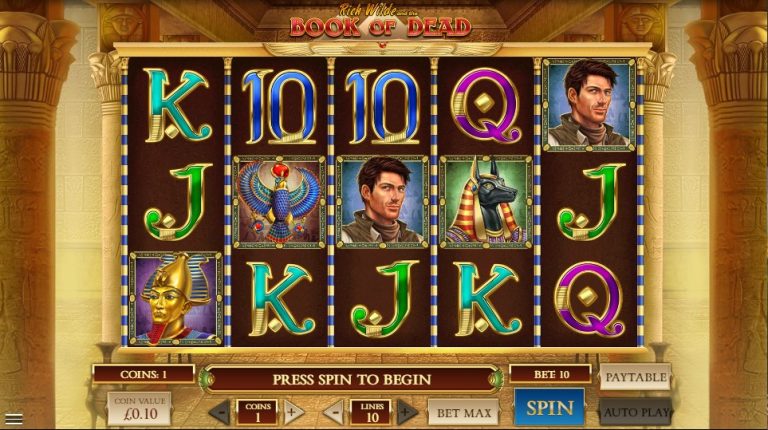
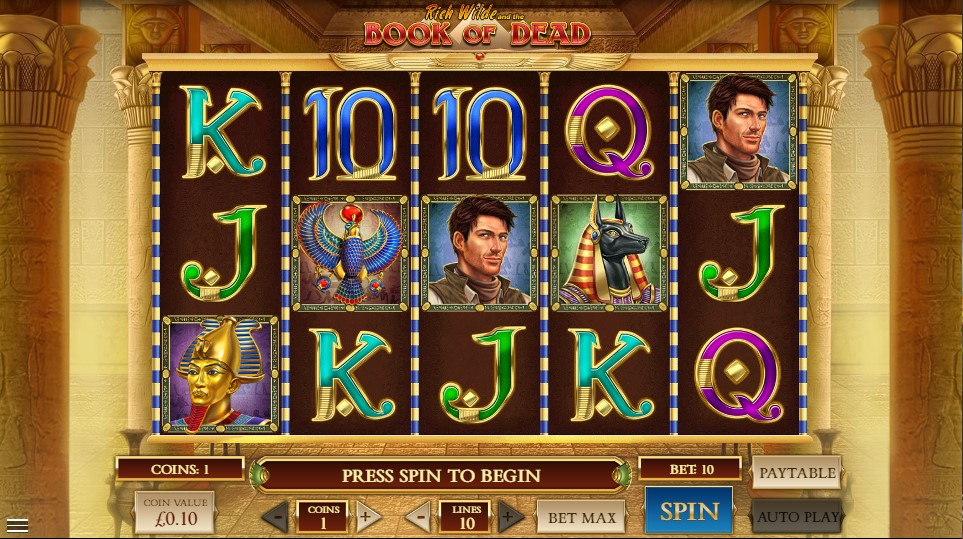
The Book of the Dead slot from Play ‘N Go

A lack of understanding of how slots work gives rise to ridiculous myths. If you know their principles and how they operate, many questions will immediately fall by the wayside. The basis of any slot machine consists of reels and rows, paylines, and RNG. Each has its own task, but coming together they give players a chance to play and win.

Reels

Reels are the vertical sections on the screen (learn in more detail on this page). They are set in motion with the ‘Spin’ button once the bet has been fixed. Along with the spinning of the reels, the symbols placed on them are generated, thus creating a combination. There is a myth that states that the more reels, the better the chances of winning. In fact, this is not the case. Its emergence occurred during the development of the 5-reel model. Such games proved to be more advanced than 3-reel games. They had more bonus features, and the mechanical principle of rotating the reels was replaced by micro-processes. Taken together, this was the reason for this myth.

The number of reels is laid down by the provider in each case. They, unlike paylines, cannot be adjusted to suit your needs. If you play slots exclusively with 5 reels, look for that model. 3 reels, 6 reels and so on slots cannot be made 5 reels. However, technological advances have reached the gambling world as well. More and more often developers are beginning to use algorithms with a variable number of reels. In some situations, reels are added during a game, and the player has a slightly better chance of winning.

The developers continue to use 3 and 5 reel mechanics. Such games form the backbone of the entire existing gaming library.

Rows

Rows in slots are horizontal lines on the screen. They are formed when the reels join together to form a single grid. The first slots had a limited number of rows, just 3. Because of this, they were far too predictable. With the advancement of technology, this situation has changed dramatically. It is no longer easy to tell at a glance how many rows a game will have.

While the standard number of reels in slots is three or five, the number of rows is slightly different. The core is games with three and four rows. The desire to surprise the players, to give them a new experience, to give new impressions led the developers to the fact that the rows have undergone a change. Now no one is surprised by models with one, five or more rows.

There are also a lot of examples where the number of rows is distributed disproportionately. For example, in the Masquerade video slot from Red Tiger, the first reel has 2 rows, the second 3 rows, the third 4 rows, the fourth 3 rows, and the fifth 2 rows. In addition, there are several variations in which the number of rows can theoretically increase to infinity. The conventional wisdom is that the more rows, the more options you have to win. This is simple to explain. The bigger the grid, the more paylines can be placed on it.

Paylines

Paylines are the lines on which you can land winning combinations. Until recently, no slot machine could exist without paylines. In order to win a payline, the symbols had to fall on a line laid out in the algorithm by the provider. In the first slots, this line was horizontal and went through the centre of the screen. Then came the video slots with a larger playing grid. So first there were models with 5-20 lines, and then with more than a hundred.

The payline is a flexible parameter. Some models support the ability to change the number of lines before each spin. In this way, the user can develop personal game strategies. In other variants, the developer fixes a certain number of lines and it cannot be changed. There are now new payout systems that completely eliminate the number of paylines. However, this does not prevent payline games from prevailing on the market. The reason is simple: Innovative payout systems are still difficult for players to navigate, so they continue to play slots with traditional payouts.

RNG

If you dig deep into the history of video slots, it turns out that slots are able to exist without such an important feature as RNG – the random number generator that ensures fairness. The fact is that for many decades slot machines were mechanical and were driven by a lever. While spinning, you could watch the reels physically spin. With the advent of computer technology, slots began to be actively improved. The RNG, which is mandatory in slot machines, appeared.

The RNG is a unique feature that can produce a spin result in a second and it will be completely random. Moreover, the most advanced developers certify their RNG in independent test laboratories. This increases the credibility of their products with partners and users alike. The certification is irrefutable proof that a game uses a reliable generator that is protected against malfunctions and external influences. RNG is not only used in video slots today. It is relevant in keno games, roulette, blackjack, etc. It is this feature that makes all online games safe and fair. It eliminates the possibility of influencing the outcome of the spin, which means that the gameplay will only depend on your luck.

MP in a skirt using Basic Instinct ploy to distract Boris, claim Tories

0
Sexy skirt tactics ‘distract the PM’

A leading opposition MP who wears a skirt on the front benches has been accused of using sexy Basic Instinct tactics to distract the Prime Minister during question time.

Tory MPs say Ian Blackford, who wears a short skirt just above the knee, regularly crosses and uncross his legs in an erotic manner as the Prime Minister is trying to speak.

“It is intentional to try and put Boris off his stride,” a Conservative MP told the Suffolk Gazette.

Mr Blackford is known to be a big Sharon Stone fan. She starred in Basic Instinct and famously uncrossed and crossed her legs revealing more than anyone bargained for.

But the Tory accusations were met with howls of derision from all sides of the house.

A Labour spokesperson, Lorraine Fisher, 34, said: “Mr Blackford is just a simple Scotsman. No one should even question his skirt or his looks. We should instead concentrate on the good work he does.

“This sort of sexist, misogenistic tripe is why there are not more Scottish men in the House of Commons.”

Don’t skirt the issue – buy one of our mugs

They make great gifts and will be enjoyed every day for years. And they come with FREE delivery in the UK! Buy direct below or see all collections at Dirty Old Goat

The essentials you should have for your home office

0

Although it’s important to take regular breaks when working from home, if you get distracted whenever you go to fetch something you need, you might need to ensure you have fewer reasons to wander around your house. Investing in more of these office essentials will help reduce procrastination.

A printer and sufficient ink

If you’re relying on the family printer located somewhere other than your home office, you could find distractions every time you go to collect your printouts. If your family are at home, they could see this as you being available, or you will notice jobs that need doing around the house. It’s too easy to fall behind on your planned work as you lose track of time. So, by having your own printer and enough ink, you can reduce this potential distraction. With printer inks hp cartridges and other brands and compatible cartridges and toners, ensuring you have enough ink could be cheaper than you expect.

Phone charger

Another chance to become distracted is when leaving your home office to find a phone charger. If you take a lot of business calls on your mobile phone, the battery can drain quickly. By having a spare charger in your office, you won’t need to waste time or lose your train of thought by going to get a charger from another room. You can also avoid your phone cutting off an important call if you only realise the battery is low mid-call.

Headphones

If your household is busy but you have an important online meeting, some noise-cancelling headphones can help you drown out distractions and hear the speaker more clearly, For important meetings, this is crucial to avoid mishearing or making mistakes, which could potentially lose money for your business. By having a pair of headphones in your home office, you won’t have to keep clients or colleagues waiting while you go find some. It’s also unprofessional to leave an online meeting while you go to look for headphones, and it makes you look disorganised.

A flask

Another common distraction when working from home is going to make a drink. It rarely involves just making a drink. Instead, there are distractions that make a walk to the kettle become a minefield of procrastination opportunities. Having a flask of coffee or tea with you will save you several trips to the kettle or having a travel kettle and everything you need to make your favourite hot drink, available in your office space.

A desk organiser

A desk organiser can also save you time. It makes it easier to find everything you need, and more obvious to work out if you don’t have the item in your office. Although you will have to leave your office to find what you need if it isn’t there, having a desk organiser helps you realise this sooner.

When setting up a home office, you’re more likely to remember the bigger things like a desk, chair and laptop. However, the smaller things can save you time, and keep you away from distractions in other parts of your house.

Donate to the editor’s latest silly idea

0

The Suffolk Gazette editor has had his arm twisted to take part in a 150-mile charity cycle ride. With hardly any training and a bulging waistline, this is sheer madness.

But you can help make his inevitable misery worth it by making a donation to the JustGiving page – it’s all for a good cause, raising money for the Ipswich Town FC Community Trust and the Futurestars charity, which helps kids in need in Ghana.

Please visit this link to find out more and help out.

Thanks!

Practices that are hindering your sleep, by a sleep expert

0
  • Sleep Expert, Katherine Hall reveals the six biggest falsehoods associated with sleep.
  • With over 13 years’ experience, Katherine explains the science to help achieve a better sleep routine.
  • Three practices that help and three practices that hinder sleep for the masses.

Get Laid Beds has teamed up with Katherine Hall, a sleep expert with over 13 years of clinical experience to bust some of the most common myths around sleep, in order to further their mission of helping everyone get a better night’s sleep.

Practices that Hinder Sleep

Going to bed despite not being tired 

Katherine says: “If you’ve ever laid in bed staring at the ceiling for minutes or even hours trying to fall asleep, you know how frustrating it can be. You close your eyes tightly and will yourself to fall asleep, but without fail, you’re left tossing, turning, and wide awake. The idea that you can force yourself to go to sleep is a common myth that could be hindering your sleep.

“When you lie awake in bed for more than 15 to 20 minutes, your brain starts to associate your bed and bedroom with being awake and alert instead of tired and sleeping. Your bed should be reserved for sleep and sex only. If you’re awake for longer than 20 minutes, get up and perform a relaxing activity with minimal light exposure. Once you feel tired enough to fall asleep, return to your bed. Continue doing this until you’re asleep within the first 20 minutes.”

Using digital devices to relax before bed

Katherine says: “We’re all guilty of watching television, reading on a Kindle or scrolling through our phones before bed as a way to relax and unwind from the day. While it may feel good to forget about your worries and indulge in some mindless entertainment, doing so on a digital device too close to bedtime could be hindering your sleep. 

“These screens emit a blue light that interferes with your sleep patterns and ability to fall asleep. The blue light from electronic devices prevents your brain from releasing the sleep hormone melatonin by tricking your brain into thinking it should be awake and alert. Ditch all digital devices at least 60 minutes before bed and replace these relaxing activities with more productive ones like reading from a book, meditating, or taking a warm bath.”

Sleeping in after staying up late the night before 

Katherine says: “Staying out late with friends, working late, or simply struggling to fall asleep, can cause you to stay up into the wee hours of the morning. In an effort to make up for lost sleep, you might sleep much later than normal the next day. This is especially common on weekends or while on vacation. While it may seem like catching up on much-needed sleep will leave you feeling rested and rejuvenated, you’re actually sabotaging your natural sleep patterns and circadian rhythm.

“Your circadian rhythm is your body’s internal clock. It regulates when you feel tired and when you feel awake and alert. When you go to bed at different times every night or wake up at different times in the morning, you’re confusing your body’s natural sleep-wake cycle. You need to set a consistent sleep schedule that involves going to bed around the same time at night and waking up at the same time each morning – even on the weekends! The belief that sleeping late will help you catch up on lost sleep is a myth. While you may feel better momentarily, in the long run, you’re sabotaging your sleep quality.”

If you’ve recently stopped doing any of the above and you’ve found that your night-time snooze has improved, then Tweet us and let us know at @SuffolkGazettte.

Golf players voted best-dressed in sport

0
Fashion icons: golf players

By Sandy Driver, Golf Correspondent

Famous for their colourful and achingly cool attire, golf players have now been officially recognised as the sporting world’s best-dressed.

With intricately-patterned trousers, shorts and tops, none of which match, together with a random baseball cap or Peaky Blinders-style hat, golf players cut a dash on fairways all over the world.

As The Open Championship gets into full swing at Royal St George’s in Sandwich, Kent, fashion-conscious youngsters can be seen dressing like their heroes on the streets of Britain.

Research by the University of Suffolk reveals golf players were the most respected for their dress sense, narrowly beating darts professionals.

Fashion expert Lorraine Fisher, 34, said: “It’s extraordinary how they do it, but somehow picking up a golf club and walking onto a course gives golf players a tremendous insight into what looks good on them.

“You only have to look at the fine specimens in the golf club bar to see a wonderful display of colour and style. They are no golf mugs.”

To further improve their winning look, golf players add shoes that look like they belong to a bowling alley – a clever accessory that had boffins at the University of Suffolk drooling.

Buy cool golf mugs

Support the Suffolk Gazette’s razor-sharp journalism by buying a golf mug from our partner, Dirty Old Goat. See all the mug collections on the website, or buy a golfing item below…

The Fintech market is changing: here’s a look at how

0

As with everything in the newly-minted digital era, Fintech is rapidly evolving. Here’s what you should know to stay on top of current trends.

What is Fintech?

Fintech, a portmanteau for Financial Technology, is a surprisingly old genre. While you’d be tempted to see it as a result of the IT boom, it actually traces its roots to 1886. As soon as we got the ability to transmit financial data fast via telegraphs, the seeds for the fintech market were sown.

When the first credit cards joined the pack in 1950, this accelerated, followed by the shift to digital from analog in the 1950s. Obviously, as bank mainframes, and then personal computers, developed, so did the financial markets.

The market truly changed after the 2008 financial crisis. Since then we’ve seen the expansion and growth of new markets, the evolution of cryptocurrencies, and the ease of access to the internet through the booming smartphone market. Surprisingly, many modern fintech innovations are driven by non-Western markets such as India and China, where lack of access to traditional physical banking means seeking out smarter solutions is a necessity, not a convenience.

Modern Fintech in a nutshell

So, what does modern Fintech look like on the ground? Even withdrawing cash from an ATM strictly counts as fintech in operation. More cutting-edge examples include transferring money through mobile options, making online payments using digital wallets, and other ways that make banking smarter, not harder.

We saw an accelerated push in the fintech space during the COVID-19 pandemic, where contactless payment methods, and easier ways of accessing cash than queueing in banks, became a critical focus. In fact, it was one of the few business sectors to see meaningful growth in 2020. Research by the deVere group suggests that the use of Fintech apps in the EU boomed by 72% in the pandemic period. Now that users have become acclimatized to these easier methods of dealing with money, there’s no sign of going back, either, despite the reopening of many places.

So, what upcoming changes can we predict for the fintech market? While nothing is set in stone in finance, let’s take a look at some likely growth sectors.

All-digital banks

Many consumers are turning away from brick-and-mortar banks entirely. Digital banks have been performing strongly in many economically underdeveloped markets for several years. Now the whole world is taking note. From contactless MasterCard solutions to international remittance, digital-only banks have overcome trust issues and become a meaningful part of the fintech sphere quickly.

Most users like the lack of tedious paperwork, the removal of the need to wait in queues, and the convenience of accessing banking infrastructure at times that suit them.

Broader options

Moving away from bank-only solutions, however, we also see the widening of Fintech resources into other markets. These new options in Fintech are notable in the Foreign Exchange industry, but we’re also seeing it with mass-market access to stock investing and crypto-investment through apps.

Blockchain

While cryptocurrencies are still a hard sell for many people, we would be remiss to not add the wider implications of blockchain technology to the developing fintech world. Offering a different way to secure and manage digital transactions, many expect the blockchain concept, possibly reworked, to continue to impact the fintech arena over the coming decades. While decentralized finance has its own risks, it’s an idea that’s become popular with many people. Provided regulation can keep up, it may be a key part of the fintech future, especially for cross-border payments. Peer-to-peer financial platforms are another growth area.

Machine learning

Many fintech operations are also looking to AI-based technology to shape the future. These are expected to cut banking operational expenses, as well as reduce the risk from cybercrime in the digital market. Its biggest value lies in allowing effective customer service, while still accurately recording every aspect of a digital transaction. We can add biometric security solutions to this avenue of the fintech world. While biometrics is seen with some skepticism in a world also becoming more aware of misuse of gathered data, it’s definitely an interesting field, and one with growth potential.

Open banking and reg-tech

Lastly, we’re seeing an interesting dichotomy brewing. Open banking forces financial institutions to use secured, standardized data and share information between authorized organizations. This makes financial monitoring easier, as well as making it simpler for clients to access the support they need across a wealth of organizations. However, Regulatory Technology, or Reg-Tech, covers the idea of better managing regulatory processes throughout the financial industry through the introduction of software-based technologies. This tightens the compliance and reporting nets and is also hoped to better tackle issues like money laundering, hacking, and data breaches.

The fintech world is an ever-evolving space, and one with great potential for the wider digital sphere, too. Where to from here? Many of these developing technologies are likely to set the future of fintech, so keep your eye on them.